Bugatti Chiron
Mid-engine sports car succeeding the Veyron, named after Louis Chiron.

via Wikipedia: Bugatti Chiron · see source
The Bugatti Chiron is a mid-engine two-seater sports car designed and developed in Germany by Bugatti Engineering GmbH and manufactured in Molsheim, France, by Bugatti Automobiles S.A.S. It succeeded the Bugatti Veyron and was first shown at the Geneva Motor Show on 1 March 2016. The car is named after the Monégasque driver Louis Chiron and shares its name with the 1999 Bugatti 18/3 Chiron concept car.
- Manufacturer
- Bugatti Automobiles S.A.S.
- Production location
- Molsheim, France
- First shown
- 1 March 2016 at Geneva Motor Show
- Engine
- 7,993 cc quad-turbocharged W16
- Peak power
- 1,103 kW (1,479 hp; 1,500 PS)
- Top speed (limited)
- 420 km/h (261 mph)
- Base price
- €2,400,000
Verified Timeline
Lore & Background
The Bugatti Chiron was first previewed by the Bugatti Vision Gran Turismo concept car at the 2015 Frankfurt Auto Show. Its engine is a heavily updated version of the Veyron's 8.0L W16, retaining the same 7,993 cc displacement and basic architecture, but extensively revised to produce 1,500 PS. The car uses a carbon fibre body structure with a stiffness of 50,000 Nm per degree, independent suspension, and a Haldex all-wheel drive system. The Chiron can accelerate from 0–100 km/h in 2.4 seconds and reached 400 km/h in 32.6 seconds during a 2017 world-record test. Its top speed is electronically limited to 420 km/h for safety reasons related to tyre stress.
Reader's Guide
The Bugatti Chiron represents a pinnacle of automotive engineering, combining extreme performance with luxury. Its quad-turbocharged W16 engine delivers 1,500 PS, making it significantly more powerful than its predecessor, the Veyron Super Sport. The car's carbon fibre body and advanced all-wheel drive system contribute to its remarkable acceleration and handling. The Chiron's production run ended in May 2024 with the Chiron L'Ultime, though Bugatti continues to manufacture cars based on the Chiron. Several variants were produced, including the track-focused Chiron Sport, the limited-edition Chiron Super Sport 300+ (which achieved 490 km/h in August 2019 with a pre-production model), and the handling-focused Chiron Pur Sport. The first 200 cars were sold before delivery began, and by January 2022 every Chiron had been sold.
Did You Know?
- The Chiron's engine in the most powerful variant of its predecessor, the Veyron Super Sport, generates 221 kW (296 hp; 300 PS) less than the new Chiron.
- In a 2017 world-record-setting test, the Chiron reached 400 km/h (249 mph) in 32.6 seconds, then needed 9.4 seconds to brake to standstill.
- The first 200 cars were sold before the first was delivered, with buyers required to place a €200,000 deposit.
- The Chiron Super Sport 300+ is powered by a 1,600 PS (1,175 kW; 1,580 hp) quad-turbocharged W16 engine nicknamed 'Thor'.
- The final base-spec Chiron was built in September 2023, and the Chiron production run ended in May 2024 with the Chiron L'Ultime.
Engineering Lineage & Design Philosophy
The Bugatti Chiron represents the culmination of a design philosophy stretching back through decades of the marque's history. Conceived in Germany by Bugatti Engineering GmbH and built in the French town of Molsheim, this mid-engine two-seater carries forward the spiritual DNA of the Veyron while pushing every parameter further. Its visual language was first hinted at through the Vision Gran Turismo concept shown at the 2015 Frankfurt Auto Show before the production car debuted at the Geneva Motor Show in March 2016. The name itself honours Louis Chiron, the celebrated Monégasque racing driver, and echoes the 1999 Bugatti 18/3 Chiron concept. At the heart of the car sits a heavily reworked 8.0-litre quad-turbocharged W16 engine producing 1,479 horsepower and 1,600 newton-metres of torque across a broad 2,000-to-6,000 rpm band. The structure is a carbon-fibre monocoque rated at 50,000 newton-metres per degree of stiffness, paired with independent suspension and a Haldex all-wheel-drive system inherited from its predecessor.
Pushing the Speed Envelope
The Chiron's acceleration figures are staggering by any measure: 0 to 100 km/h in 2.4 seconds, 0 to 200 in 6.5, and 0 to 300 in 13.6. In 2017, a factory test run set a world record at the time, reaching 400 km/h in just 32.6 seconds before requiring 9.4 seconds to brake back to a stop. Yet the car's true ceiling is deliberately restrained. Bugatti electronically caps the standard Chiron at 420 km/h, or 375 to 380 km/h without a special key, citing tyre limitations as the primary safety concern—no rubber compound on the market could withstand the forces at the car's theoretical maximum. Independent testing by an owner confirmed the car comfortably reaches its limited top speed. The Super Sport 300+ variant, powered by a 1,600-horsepower engine nicknamed Thor and shared with the Centodieci, stretched the envelope further. A pre-production example hit 490 km/h in August 2019, and Bugatti prepared owner cars for full-speed runs at the Ehra-Lessien test track. Mixed fuel consumption of 22.5 litres per 100 km is a small price for such velocity.
A Limited Run of Extraordinary Variants
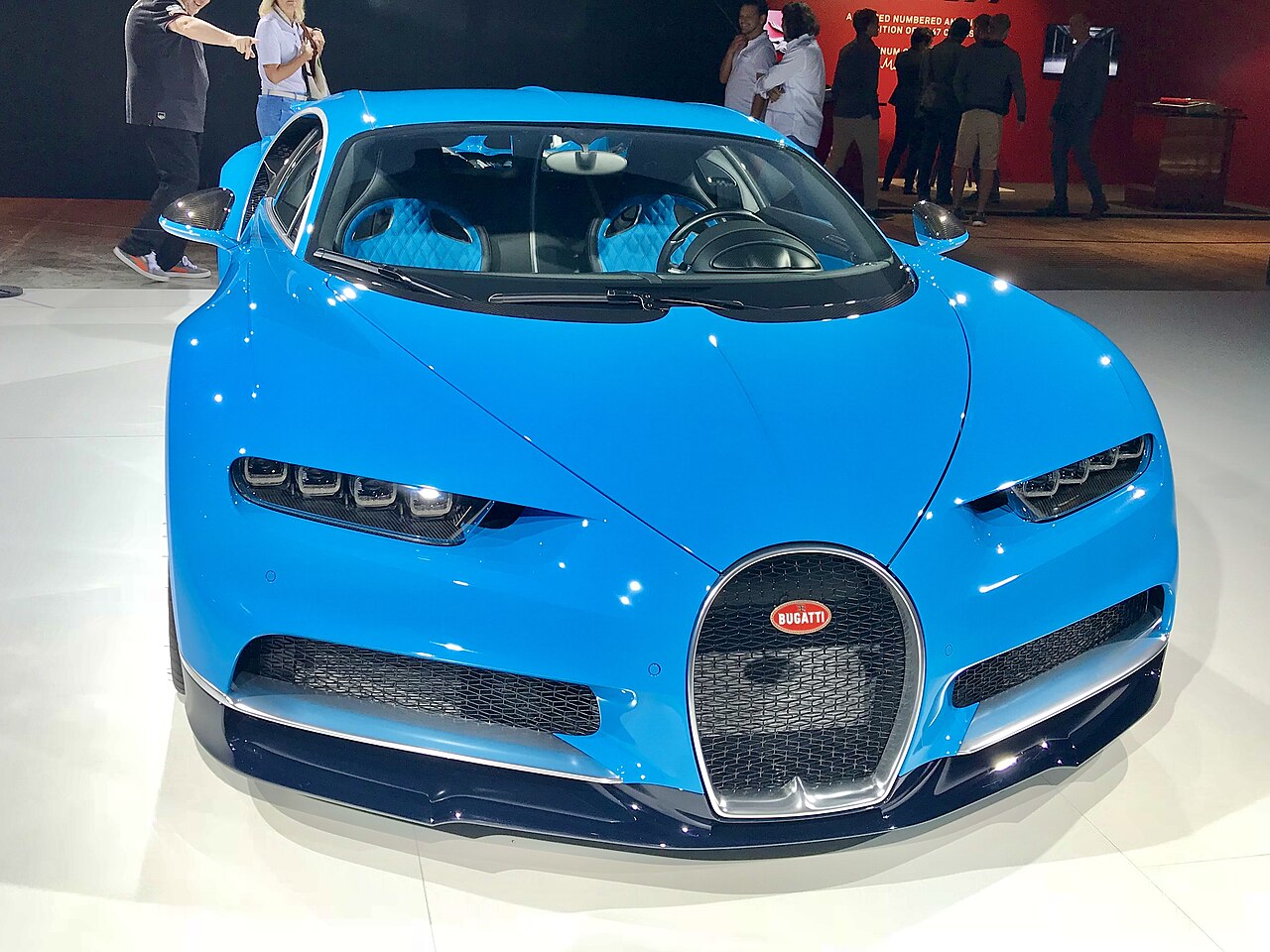
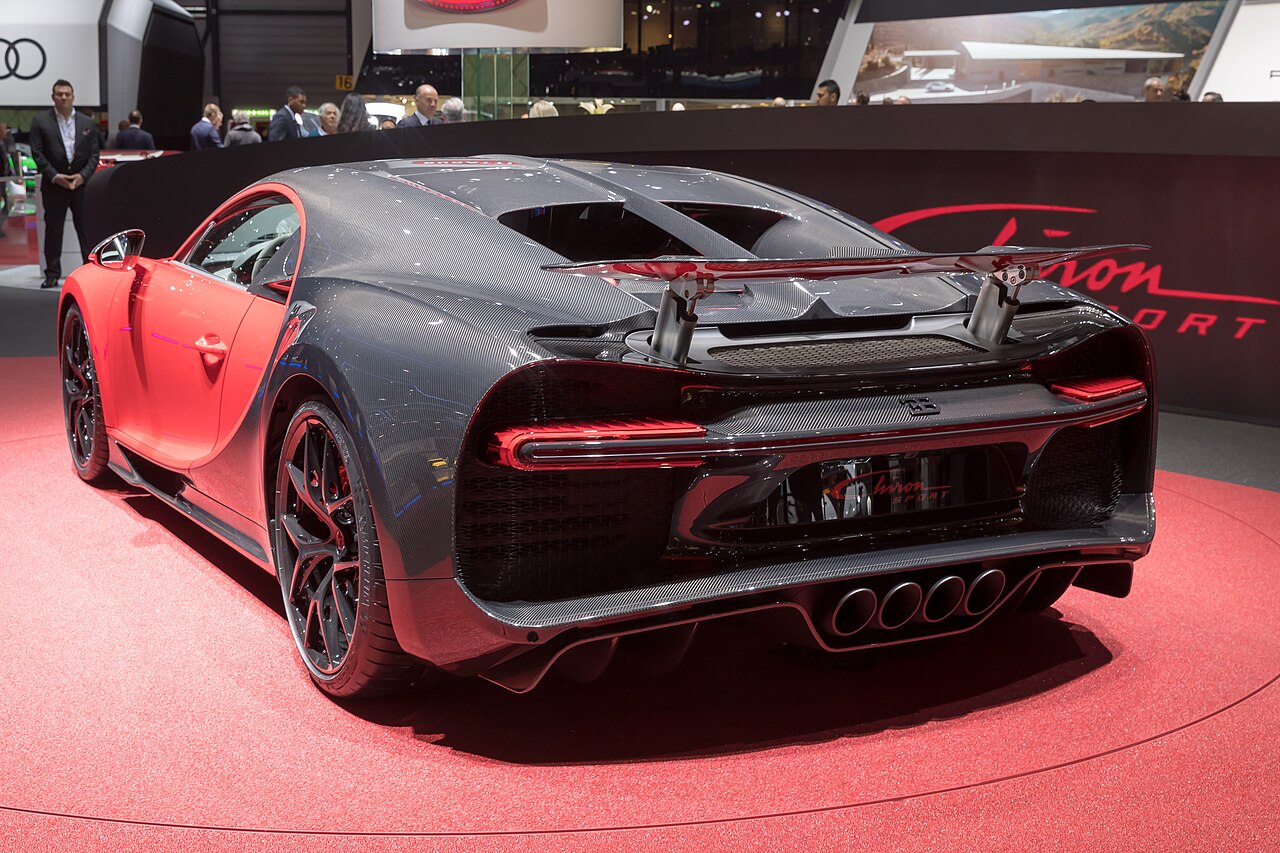
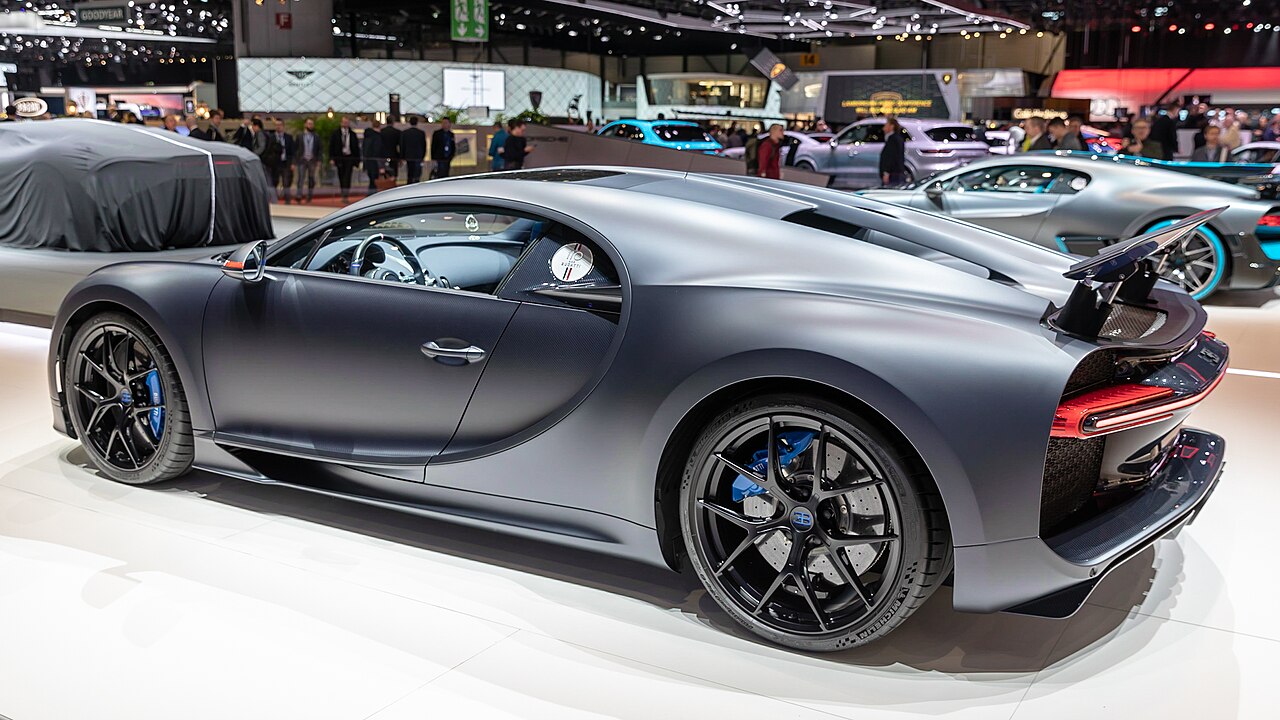
The Chiron's commercial story is as remarkable as its engineering. All 200 units were sold before a single car was delivered, with a base price of €2.4 million and a mandatory €200,000 deposit. The first three reached owners in Europe and the Middle East in March 2017, and by January 2022 every car had found a buyer. Bugatti expanded the range with several special editions. The 2018 Chiron Sport shed 18 kilograms through lighter exhaust components and extensive carbon-fibre use, added torque vectoring and a stiffer suspension for sharper cornering, and carried a $400,000 premium. The 110 Ans Bugatti, limited to 20 cars, celebrated the marque's anniversary with matte Steel Blue paint, French tricolour accents on mirrors, fuel cap, and seat headrests, and blue Alcantara upholstery. The Super Sport 300+, capped at 30 examples at €3.5 million each, featured a lacquered carbon-fibre body with orange stripes echoing the Veyron record cars, a 248.9 mm length increase for high-speed aerodynamics, and a modified gearbox with longer ratios. A 2022 factory recall addressed a loose front frame support screw on one 2018 car.
Closing the Chapter
The final base-spec Chiron rolled off the line in September 2023, finished in Nocturne Black and Copper with a warm Copper tan interior—a fitting farewell to the standard model. Production of the entire Chiron family concluded in May 2024 with the Chiron L'Ultime, a North-American-market Super Sport adorned in fading blue paint and inscribed with the car's history and achievements across its bodywork. Yet the Chiron's story does not end there. Bugatti confirmed it will continue manufacturing cars based on the Chiron platform, ensuring the architecture lives on in future models. The name itself carries a double legacy: honouring Louis Chiron, the Monégasque driver whose racing career spanned the 1920s and 1930s, and recalling the 1999 Bugatti 18/3 Chiron concept that first explored the name in a design context. From the Vision Gran Turismo preview in Frankfurt to the final L'Ultime, the Chiron encapsulated a decade of Bugatti's ambition to build the ultimate grand tourer while repeatedly redefining what a production car could achieve in a straight line.
Common Misconceptions (Editorial)
- Some believe the Bugatti Chiron’s top speed is its actual maximum, but it is electronically limited to 420 km/h due to tyre stress, not because the car cannot go faster. - It is sometimes thought the Chiron uses an entirely new engine, but its 8.0L W16 is a heavily updated version of the Veyron’s engine, retaining the same 7,993 cc displacement and basic architecture. - A common misconception is that the Chiron was the first Bugatti named after Louis Chiron; however, the 1999 Bugatti 18/3 Chiron concept car shared the same name.
Why It Matters (Editorial)
The Bugatti Chiron represents the pinnacle of automotive engineering, pushing the boundaries of speed, power, and luxury in a production car. Its limited production run and immense price tag make it not just a vehicle but a modern artifact of human ingenuity and a symbol of exclusivity that will endure in automotive history.
Gallery
Frequently Asked Questions
What is the Bugatti Chiron?
The Bugatti Chiron is a mid-engine, two-seat supercar that serves as the direct successor to the Bugatti Veyron. It was developed by Bugatti Engineering GmbH and first unveiled to the public at the Geneva Motor Show on 1 March 2016.
What engine powers the Bugatti Chiron?
Under the hood sits a 7,993 cc quad-turbocharged W16 engine that delivers a peak output of 1,103 kW (1,479 hp / 1,500 PS). This remains one of the most powerful production-engine configurations ever fitted to a road car.
How fast can a Bugatti Chiron go?
The Chiron is electronically capped at a top speed of 420 km/h (261 mph) in standard production trim. Although Bugatti has recorded higher figures during private test runs, the governor limits the car to that 420 km/h ceiling.
Who is the Bugatti Chiron named after?
The name honours Louis Chiron, a Monegasque racing driver active in the early 1900s. It also nods to the 1999 Bugatti 18/3 Chiron concept car that previewed the marque's design language before its modern revival.
Where is the Bugatti Chiron built?
Final assembly takes place in Molsheim, France, at the Bugatti Automobiles S.A.S. plant in Alsace. The car's engineering and design work is carried out by Bugatti Engineering GmbH in Germany before production begins.
More in Supercars 1-20
Spotted an error? Know more?
This is a living reference — every entry is fact-audited, and reader corrections feed straight into our audit queue. Suggest an edit · See this site's audit record