Rimac Nevera
All-electric Croatian hypercar limited to 150 units.

via Wikipedia: Rimac Nevera · see source
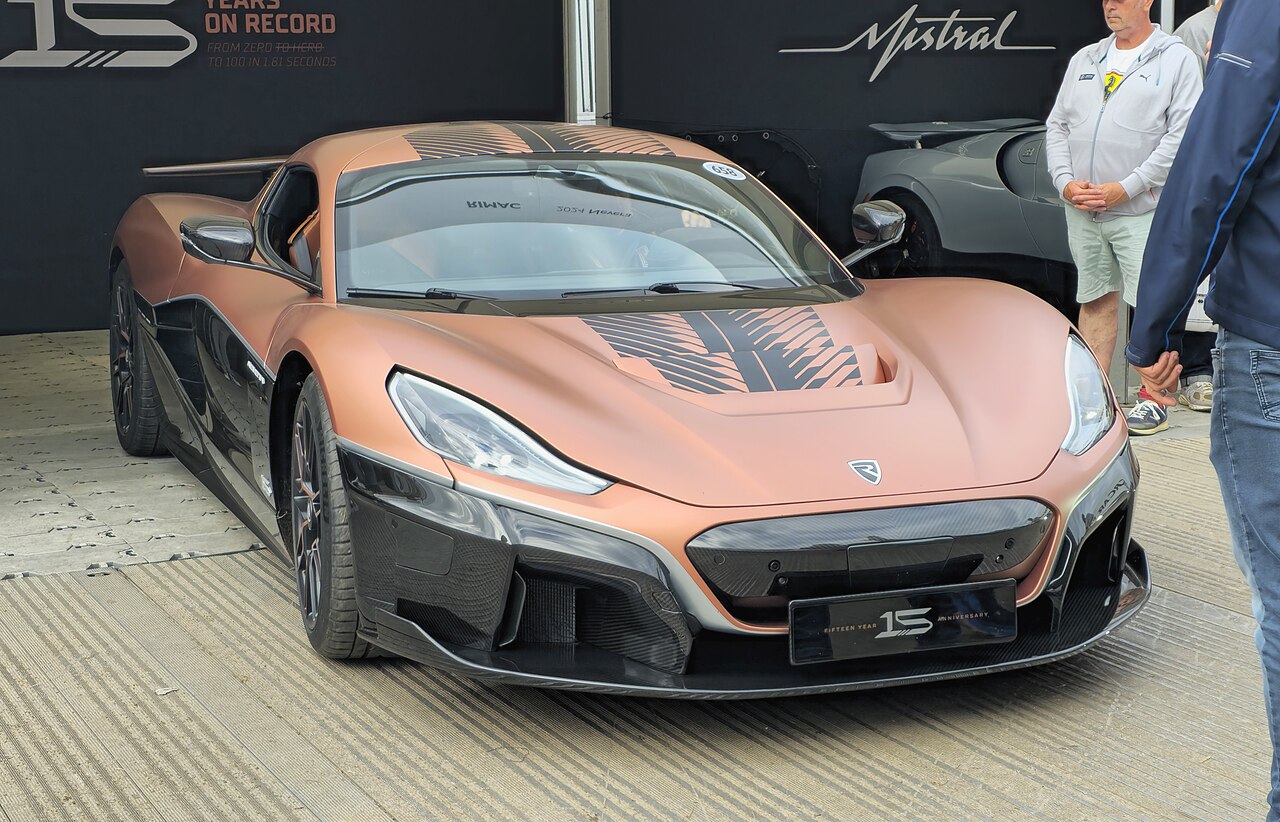
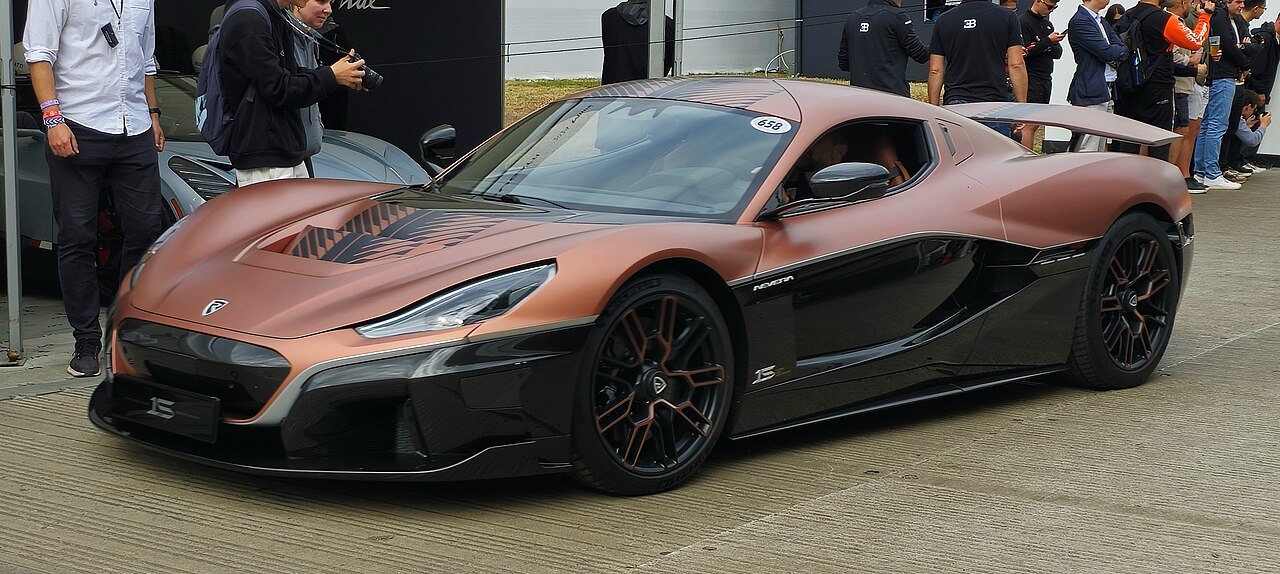
The Rimac Nevera is an all-electric sports car designed and manufactured by the Croatian automotive manufacturer Rimac Automobili. Initially unveiled as the Rimac C_Two at the 2018 Geneva Motor Show, it was later renamed Nevera upon its launch. It is the automaker's second car after the Rimac Concept One and has been described as part of a 'pursuit of the ultimate electric hypercar driving experience.' Production has been limited to 150 vehicles, with the first production prototype released in August 2021 and first customer deliveries beginning in August 2022.
- Manufacturer
- Rimac Automobili
- Production
- Limited to 150 vehicles
- First production prototype released
- August 2021
- First customer delivery
- August 2022
- Power output
- 1,914 PS (1,408 kW; 1,888 hp)
- Top speed
- 412 km/h (256 mph)
- 0–100 km/h (0–62 mph)
- 1.82 s
Verified Timeline
Lore & Background
The Nevera was initially revealed as the C_Two concept car in 2018. Rimac spent over three years refining the car through an extensive test and development programme, with almost all key components designed and manufactured at Rimac's headquarters near Zagreb, Croatia. Four prototypes were constructed for different testing purposes during the global homologation process. In June 2020, a new facility in Veliko Trgovišće began serving as the assembly site for homologation prototypes and production vehicles, with a planned capacity of four vehicles per month. The crash test program for global homologation was completed in February 2022, after European crash testing had been completed in 2021.
Reader's Guide
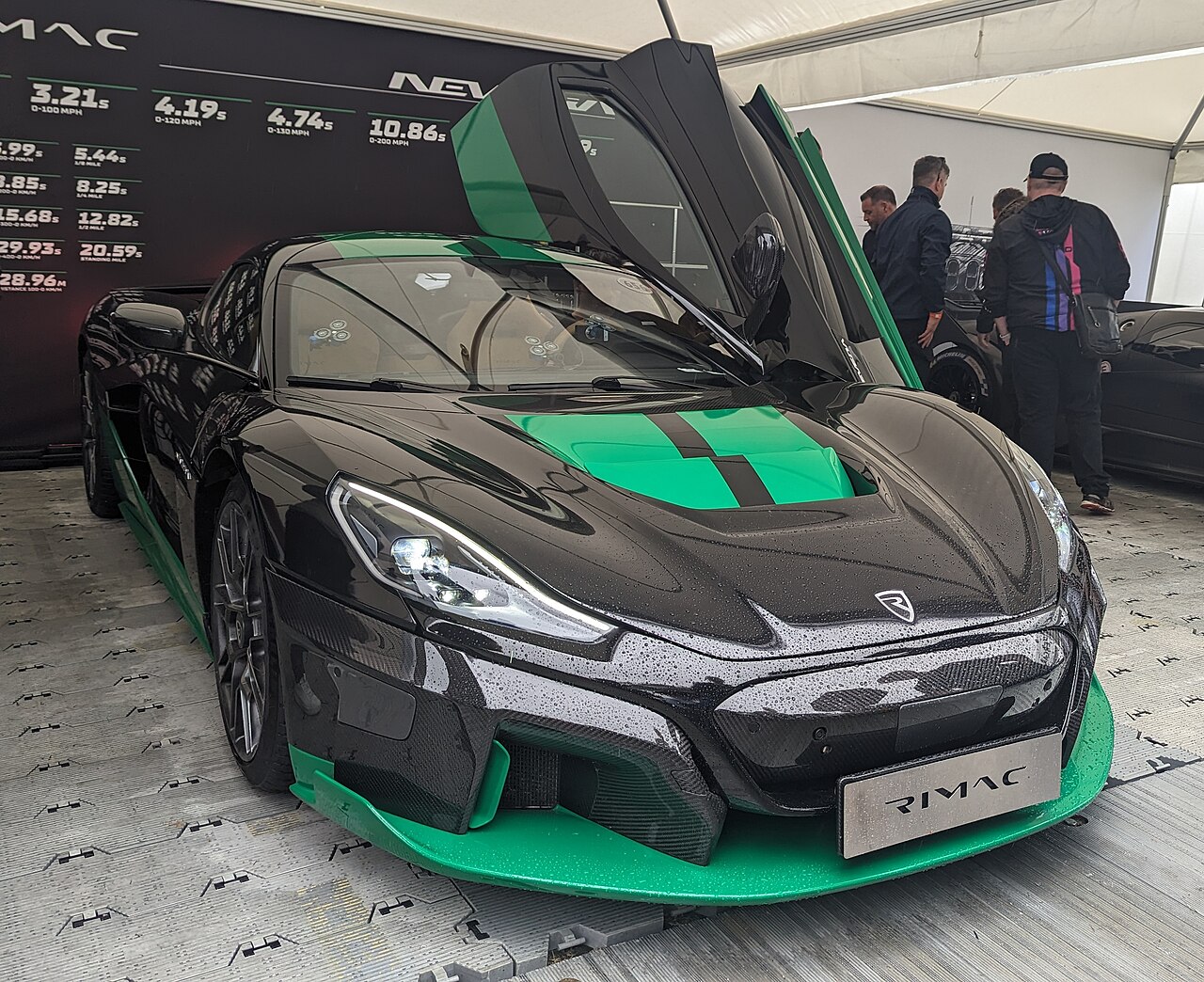
The Rimac Nevera represents a significant milestone in electric vehicle performance, setting multiple world records and challenging the dominance of internal-combustion hypercars. On 15 November 2022, it reached 412 km/h (256 mph) at the Automotive Testing Papenburg track, leading to media outlets calling it the 'fastest electric car in the world.' On May 17, 2023, it set 23 performance records in a single day, including 0–97 km/h (0–60 mph) in 1.74 seconds and a quarter-mile time of 8.25 seconds. It also set records at the Goodwood Festival of Speed (49.32 seconds on 17 July 2023) and the Nürburgring (7:05.298 minutes on 18 August 2023). The Nevera features four independently driven electric motors, a claimed WLTP range of 490 km (300 mi), and sensors for SAE Level 4 autonomous driving. Its name derives from the Croatian word for sudden storms accompanied by lightning along the Adriatic coast. The car's significance is underscored by reviews from publications such as Car and Driver, which stated that 'hypercars like the Nevera aren't for everyone, but there's no denying its significance as the moment a battery-powered car toppled the Bugatti Chiron.'
Did You Know?
- The name Nevera comes from the Croatian word for sudden and short storms, usually accompanied by lightning, which occur primarily along the Croatian Adriatic coast.
- The first production-spec Nevera was delivered in August 2022 to 2016 Formula One World Champion Nico Rosberg as car number 1.
- The car has a fire extinguisher in the back held by a leather strap embossed with 'In case of hill climb, extinguish fire,' referencing Richard Hammond's crash in a Concept One.
- On 10 July 2025, the Nevera R set a 0–400–0 km/h world record of 25.79 seconds, beating the Koenigsegg Jesko Absolut's 27.93 seconds from 02 July 2024.
- The Nevera is manufactured in the same factory and at the same rate (roughly 1 per week) as the Pininfarina Battista, which is based on the same platform.
From C_Two to Nevera: A Croatian Storm Takes Shape
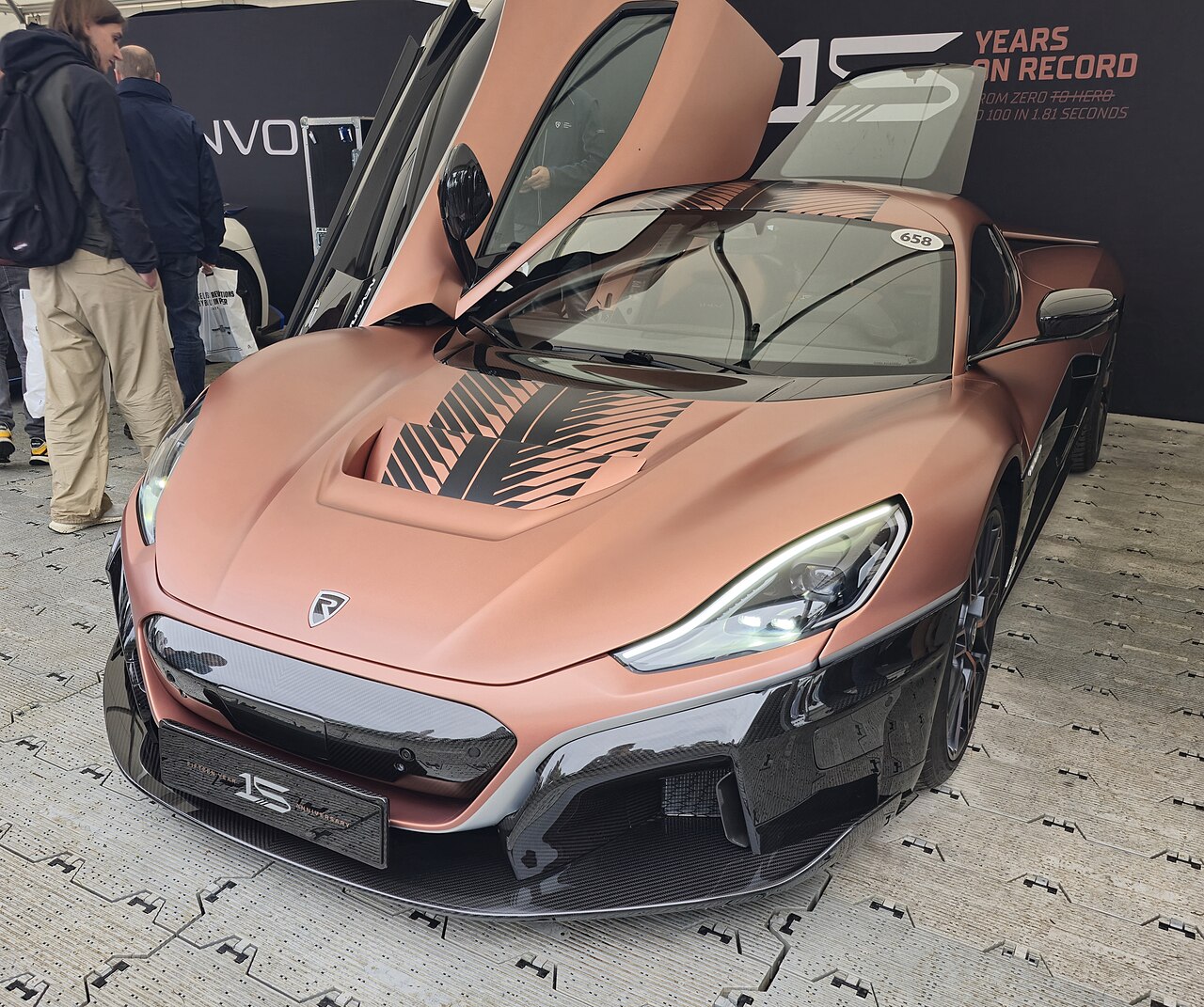
The Rimac Nevera first appeared at the 2018 Geneva Motor Show under the working name C_Two, receiving its final identity only at production launch. The name evokes a Croatian coastal phenomenon: brief, violent storms crackling with lightning along the Adriatic shoreline. As Rimac's second car after the Concept One, the project demanded over three years of iterative refinement before customers could receive keys. Nearly every critical component was engineered and built in-house at the Zagreb-area headquarters. Four dedicated prototypes were constructed for global homologation, and a purpose-built assembly facility in Veliko Trgovišće opened in mid-2020 to handle both crash-test mules and customer deliveries. European crash certification wrapped in 2021, while the final US passive-safety tests concluded in February 2022. The very first production-spec Nevera reached 2016 Formula One champion Nico Rosberg in August 2022, with American deliveries following in June 2023. The entire run is capped at 150 units, built at roughly one per week alongside the Pininfarina Battista on the shared platform. By May 2024, founder Mate Rimac confirmed just over fifty had been delivered, a pace he acknowledged was slower than projected.
A Record-Breaking Machine
Under the skin, the Nevera pairs four independently driven carbon-sleeve permanent-magnet motors with single-speed gearboxes, combining for 1,914 PS and 2,360 N⋅m of torque. That hardware translated into a string of headline results. In November 2022, Rimac filmed the car hitting 412 km/h on the Papenburg test track, a figure that earned it the 'fastest electric car in the world' label across media outlets. The following May, the company announced the Nevera had set 23 performance records in a single day, including a 0-to-60 mph sprint of 1.74 seconds, a quarter-mile pass in 8.25 seconds, and a 0-400-0 km/h run completed in 29.93 seconds. The car's versatility extended beyond straight-line speed: in July 2023 it became the fastest production EV at Goodwood's hill climb at 49.32 seconds, and in August Croatian driver Martin Kodrić posted a 7:05.298 lap at the Nürburgring. Range figures of 647 km under NEDC and 490 km under WLTP, plus the claim of two consecutive Nürburgring laps with negligible performance loss, underscored Rimac's insistence that the car was built to be driven hard, not just admired.
Design Details & Engineering Philosophy
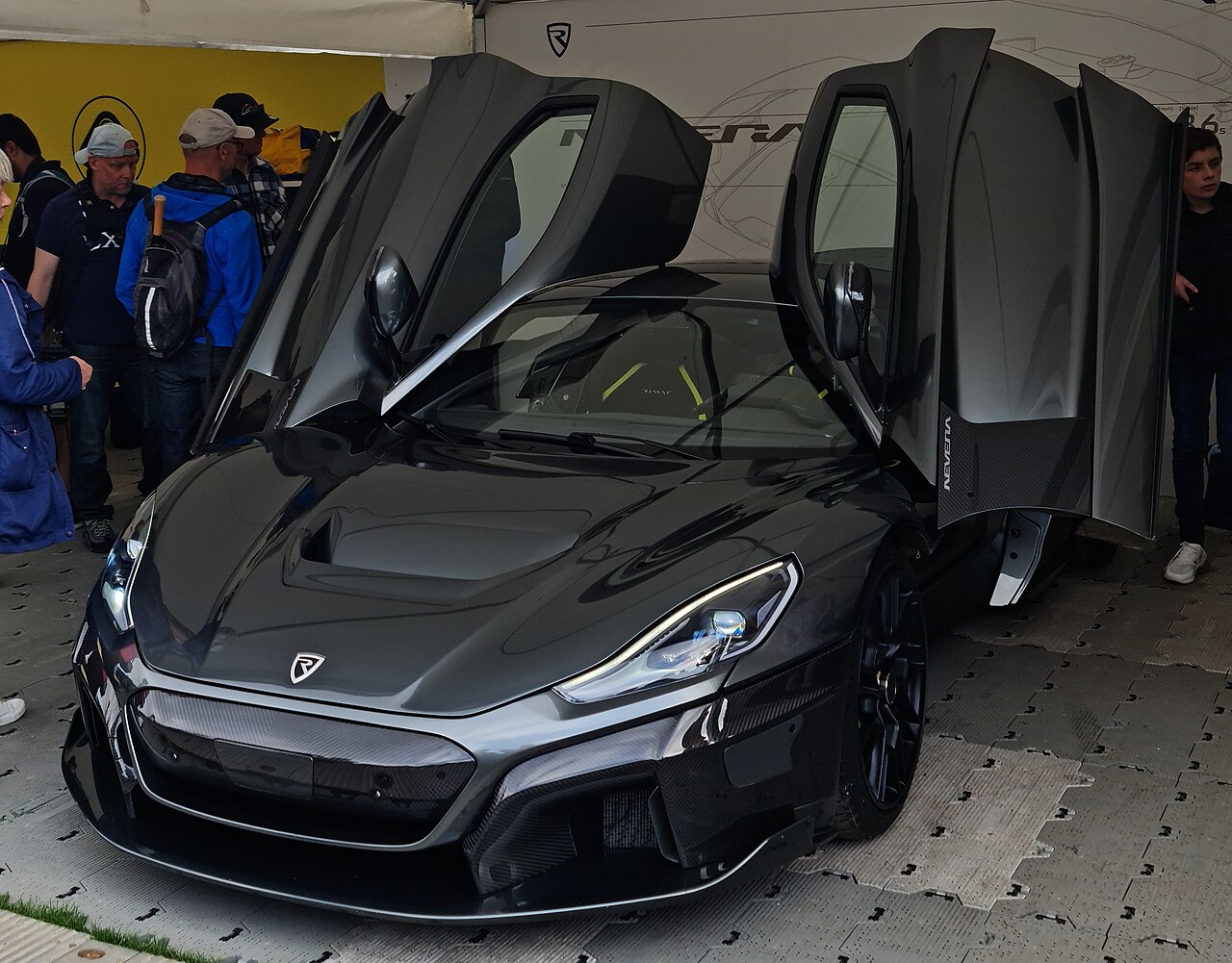
Rimac's approach to the Nevera blended raw capability with a few characterful touches. The car abandons conventional doors in favor of butterfly panels, and its cabin houses sensors calibrated for SAE Level 4 autonomous driving, ready to activate once a software upgrade arrives. A full advanced driver-assistance suite is standard. Perhaps the most memorable detail sits in the rear: a fire extinguisher secured by a leather strap embossed with the words 'In case of hill climb, extinguish fire.' The line is a direct nod to Richard Hammond's infamous crash in a Concept One during a Grand Tour hill-climb segment, in which the car caught fire and Hammond survived with a broken leg. Beyond the humor, the engineering philosophy is unapologetically performance-first. The car shares its platform, factory, and weekly build rate with the Pininfarina Battista, yet Rimac designed it to endure sustained hard driving. A fast charger can restore 80 percent of the battery in under thirty minutes, keeping the car available for repeated track sessions without long downtime.
The Nevera R: Pushing the Envelope Further
In August 2024, Rimac introduced the Nevera R, a track-oriented evolution that reworked all four electric motors to deliver 2,107 PS while retaining the same 2,360 N⋅m of torque. Shedding weight to approximately 2,265 kg, the R accelerates from 0 to 60 mph in 1.74 seconds and reaches a top speed of 430 km/h. Aerodynamic upgrades—a fixed rear wing, enlarged diffuser, and redesigned front bumper—boost downforce by 15 percent and aero efficiency by 10 percent. Michelin Cup 2 tyres, sharper camber, and refined torque vectoring cut understeer by 10 percent while increasing lateral grip. The R's capabilities were validated in July 2025 at Papenburg, where Rimac set 24 world records in a single session. The headline figure was a 0-400-0 km/h time of 25.79 seconds, shattering the previous benchmark of 27.93 seconds set by the Koenigsegg Jesko Absolut just a month earlier. The result cemented the Nevera R's place at the very top of the electric performance hierarchy.
Common Misconceptions (Editorial)
1. Some believe the Nevera is a revised version of the Concept One, but it is actually Rimac’s second entirely new model, having been initially unveiled as the C_Two in 2018 before being renamed Nevera at launch. 2. It is sometimes assumed the car was named after a person or place, but the name Nevera comes from the Croatian word for sudden storms with lightning that occur along the Croatian Adriatic coast.
Why It Matters (Editorial)
The Rimac Nevera matters because it represents a watershed moment for electric hypercars, proving that battery-powered vehicles can not only match but exceed the performance benchmarks of legendary combustion-engine rivals. Its limited production of 150 units and methodical, in-house development in Croatia underscore a shift toward small-scale, technology-driven automakers reshaping the industry’s future.
Gallery
Frequently Asked Questions
What is the Rimac Nevera?
It is an all-electric hypercar hand-built by Croatian manufacturer Rimac Automobili, originally shown as the C_Two at the 2018 Geneva Motor Show before being renamed for its production launch. It serves as the company's second model, following the earlier Concept One.
How fast is the Rimac Nevera?
The Nevera generates 1,914 PS (about 1,888 hp) of electric power and reaches a top speed of 412 km/h (256 mph), placing it among the fastest production cars ever made.
How many Rimac Nevera units exist?
Production is strictly capped at 150 cars worldwide. The first production prototype rolled out in August 2021, and the first customer deliveries began in August 2022.
When was the Rimac Nevera first revealed?
The car was initially unveiled as the Rimac C_Two at the 2018 Geneva Motor Show. It was later rebranded to Nevera when the production version was officially launched.
Why is the Rimac Nevera a big deal in the supercar world?
It proves that a fully electric, Croatian-built hypercar can deliver over 1,900 horsepower and a 256 mph top speed, rivaling the best internal-combustion supercars. Its ultra-limited run of just 150 units also makes each car an extremely rare collector's piece.
More in Supercars 1-20
Spotted an error? Know more?
This is a living reference — every entry is fact-audited, and reader corrections feed straight into our audit queue. Suggest an edit · See this site's audit record