
Koenigsegg Jesko
A Swedish hypercar named after the founder's father, sold out before its debut.

via Wikipedia: Koenigsegg Jesko · see source
The Koenigsegg Jesko is a limited production mid-engine sports car produced by the Swedish automobile manufacturer Koenigsegg Automotive AB. Introduced at the 2019 Geneva Motor Show, the car was completely sold out before the show ended. Succeeding the Agera, the Jesko is named as a tribute to the company founder's father, Jesko von Koenigsegg. There are three variations: the 'Absolut', 'Attack', and 'Sadair's Spear'.
- Manufacturer
- Koenigsegg Automotive AB
- Country
- Sweden
- Production limit
- 125 units (Jesko); 30 units (Sadair's Spear)
- Engine
- 5.1 L twin-turbocharged V8, up to 1,600 hp on E85
- Transmission
- 9-speed multi-clutch Light Speed Transmission (LST)
- Variants
- Attack, Absolut, Sadair's Spear
- Notable record
- 0–400–0 km/h in 27.83 seconds (Jesko Absolut, 2024)
Verified Timeline
Lore & Background
The Jesko was introduced at the 2019 Geneva Motor Show and was completely sold out before the show ended. It succeeds the Agera and is named as a tribute to the company founder's father, Jesko von Koenigsegg. The car is powered by a development of the 5.1 L twin-turbocharged V8 engine from the Agera, featuring a new 180-degree flat-plane crankshaft that saves 5 kg and increases the redline to 8,500 rpm. It uses active rubber mounts from the Regera to reduce engine vibrations, and a 20-litre carbon fibre air tank coupled with an electric compressor feeds pressurised air to the turbochargers at 20 bar to reduce turbo lag.
Reader's Guide
The Koenigsegg Jesko represents a significant evolution in Koenigsegg's hypercar lineage, succeeding the Agera with advanced engineering and multiple specialized variants. Its engine, derived from the Agera's V8, incorporates a flat-plane crankshaft and a 20-bar air tank system to minimize turbo lag, while the in-house 9-speed Light Speed Transmission enables gear changes in 20–30 milliseconds. The car's three variants—Attack, Absolut, and Sadair's Spear—cater to different performance priorities: track downforce, top speed, and extreme track performance, respectively. The Jesko's production was limited to 125 units, all sold before the 2019 Geneva Motor Show ended, and the first customer car was delivered in June 2023. The Absolut variant's 0–400–0 km/h record in 2024 underscores its engineering prowess. The Jesko's legacy lies in its demonstration of Koenigsegg's ability to push boundaries in aerodynamics, powertrain efficiency, and lightweight construction, while maintaining a focus on driver engagement and exclusivity.
Did You Know?
- The Jesko was completely sold out before the 2019 Geneva Motor Show ended.
- The engine's redline increased from 8,250 rpm to 8,500 rpm thanks to a new 180-degree flat-plane crankshaft that saves 5 kg.
- The Light Speed Transmission can shift gears in 20 to 30 milliseconds.
- On 26 June 2024, the Jesko Absolut broke the 0–400–0 km/h record with a time of 27.83 seconds at Örebro Airport.
- The Jesko Attack lapped the Gotland Ring in 2:56.97, beating a Porsche 911 GT3 RS Manthey-Racing edition by nearly seven seconds.
A Name Rooted in Family and a Car That Sold Out Before the Lights Went Down
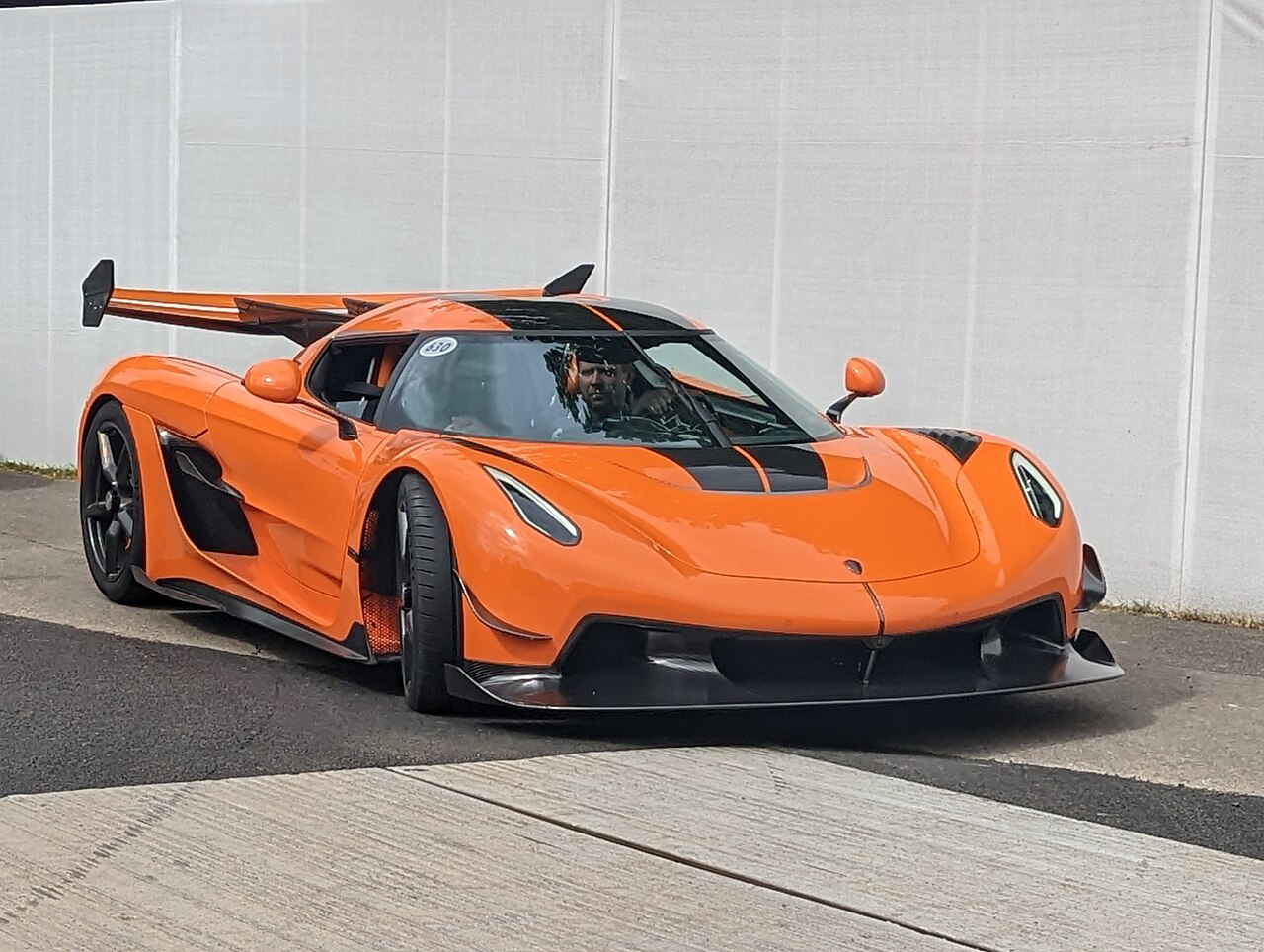
The Koenigsegg Jesko carries a deeply personal name, honouring Jesko von Koenigsegg, the father of the company's founder. As the spiritual successor to the Agera, it marks the next evolutionary step for the Swedish marque. The car made its public debut at the 2019 Geneva Motor Show, where demand was so immediate that every single build slot was claimed before the exhibition even closed its doors. Production is capped at just 125 units worldwide, with Koenigsegg planning to deliver roughly 40 to 50 per year. Unlike earlier models, the Jesko is homologated for road use across the globe, broadening its accessibility. Buyers can choose between the high-downforce Attack configuration, tuned for track performance, or the low-drag Absolut variant, which prioritises reduced aerodynamic resistance. A third, more extreme option called Sadair's Spear also exists. The first pre-series production car was revealed in July 2021, with initial customer deliveries originally targeted for spring 2022, though the first car actually reached its owner in June 2023.
A Flat-Plane V8 That Drinks Biofuel and Monitors Itself
At the heart of the Jesko sits a 5.1-litre twin-turbocharged V8, evolved directly from the Agera's powerplant but with meaningful refinements. The most notable mechanical change is a new 180-degree flat-plane crankshaft that sheds five kilograms of mass and pushes the redline from 8,250 to 8,500 rpm. On regular petrol, the engine produces 1,280 horsepower at 7,800 rpm and 1,000 newton-metres of torque across a broad 2,700 to 6,170 rpm band. Switch to E85 biofuel and the output jumps to a staggering 1,600 horsepower with 1,500 newton-metres of torque at 5,100 rpm. To tame turbo lag, Koenigsegg fitted a 20-litre carbon-fibre air tank paired with an electric compressor that feeds the two turbochargers at 20 bar of pressure. Each cylinder is monitored in real time by dedicated pressure sensors feeding the multipoint fuel injection system. Active rubber mounts borrowed from the Regera keep cabin vibrations in check, and the four-valve-per-cylinder head runs at a 92 by 95.25 mm bore-and-stroke with an 8.6:1 compression ratio.
The Light Speed Transmission: No Flywheel, No Interruption
Koenigsegg's in-house Light Speed Transmission, or LST, is a 10-speed multi-clutch unit that replaces the older seven-speed dual-clutch gearbox. Weighing just 90 kilograms, it is at least 50 percent shorter in overall length than its predecessor. The layout uses an input shaft carrying three fixed gears, a secondary shaft with three gears locked to the output shaft, three clutched gears on the input side, and four clutched gears on the output shaft, one of which handles reverse by mating directly to the input shaft. This architecture allows clutches to overlap during shifts, meaning power delivery is never interrupted. Shift times range from 20 to 30 milliseconds. The engine's crankshaft connects directly to the LST, and the rotating mass of the transmission components replaces a conventional flywheel. An overdrive mode dubbed Ultimate Power on Demand lets the car skip directly to the optimal gear rather than stepping through intermediate ratios. An onboard computer reads engine and road-speed data to select gears, while the driver inputs commands via steering-column paddles or the gear selector.
A Wider Tub, Smarter Dampers, and Doors That Open Like a Garage
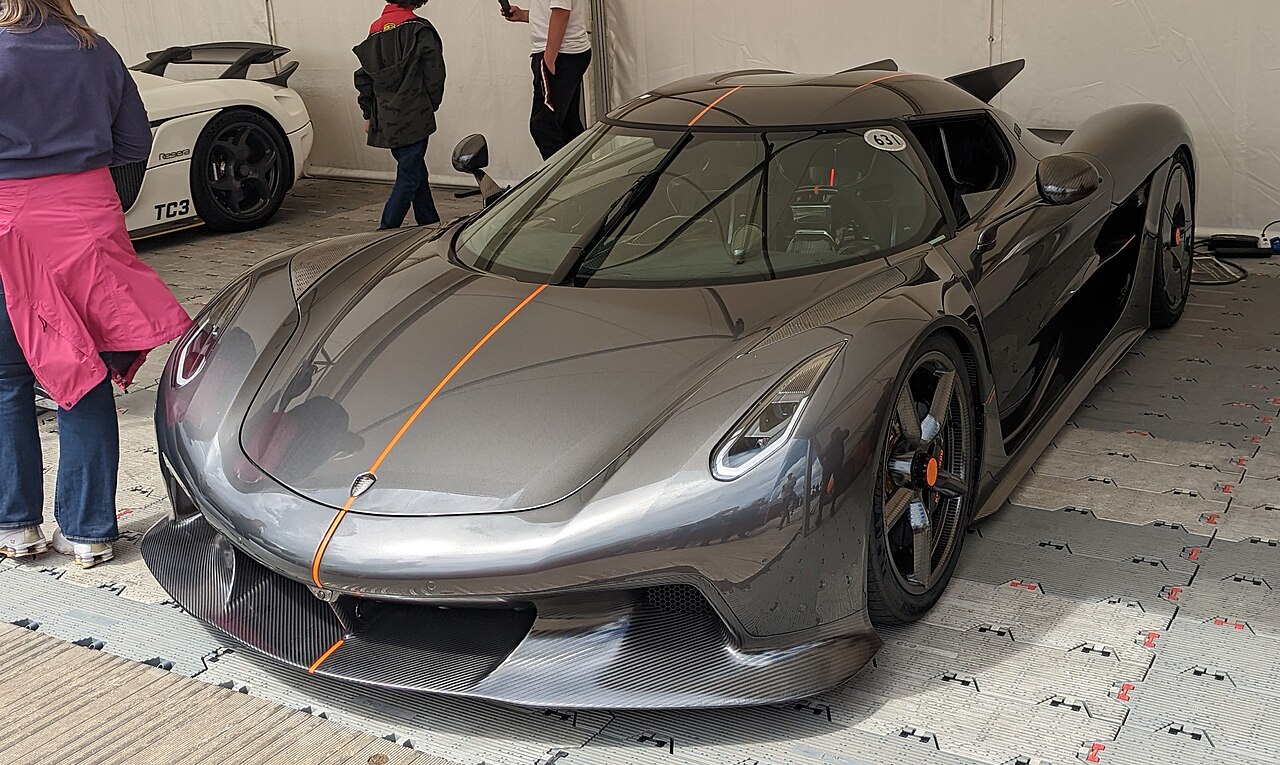
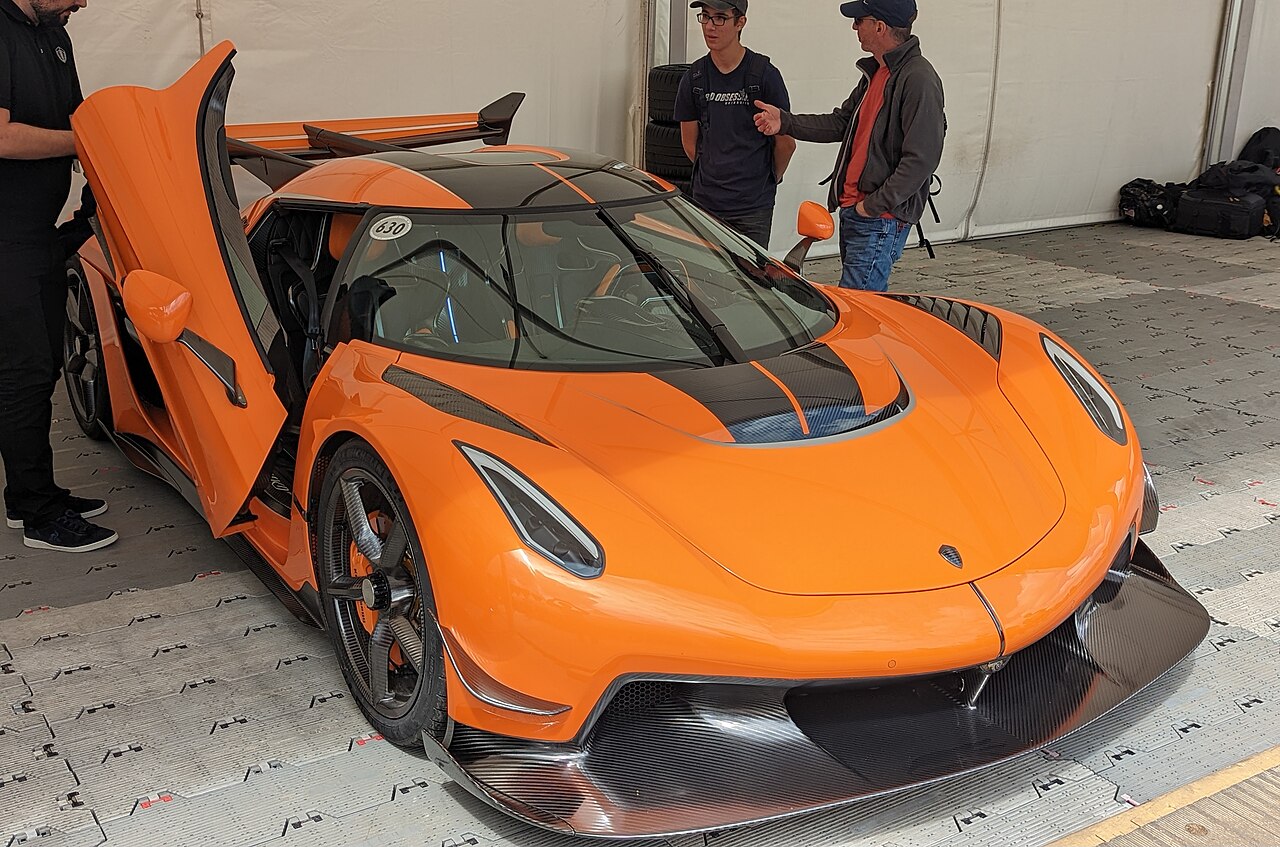
The Jesko's carbon-fibre body tub is 40 millimetres longer and 22 millimetres wider than the Agera's, creating noticeably more leg and headroom inside. A redesigned aluminium monocoque structure is woven into the tub for greater rigidity. The high-downforce Attack variant employs Koenigsegg's Triplex damper system at both the front and rear, combined with conventional Öhlins dampers. A dedicated horizontal rear damper prevents the back end from squatting under hard acceleration, while the front dampers stabilise the car at speed and active rear-wheel steering adds further composure. The car inherits the Regera's Autoskin system, enabling remote operation of the doors and hood. Hydraulic actuators can lift the front and rear axles to increase ground clearance. Doors open wider and clear the ground more easily when deployed. The roof is secured with screws to resist aerodynamic forces at extreme speeds. Standard forged-aluminium centre-lock wheels measure 20 inches up front and 21 inches at the rear, with lighter carbon-fibre options available. Braking is handled by ventilated carbon-ceramic discs, and Michelin Pilot Sport Cup 2 rubber is standard, with Cup 2 R track tyres as an option.
Common Misconceptions (Editorial)
Some people assume the Koenigsegg Jesko has three main variants, but the facts confirm there are three variations: the 'Absolut', 'Attack', and 'Sadair's Spear'. Others may think the Jesko is still available for purchase, but it was completely sold out before the 2019 Geneva Motor Show ended. A common misconception is that the engine is entirely new; in reality, it is a development of the Agera’s 5.1 L twin-turbocharged V8, with a new 180-degree flat-plane crankshaft that saves 5 kg and raises the redline to 8,500 rpm.
Why It Matters (Editorial)
The Koenigsegg Jesko matters because it represents the pinnacle of engineering ambition—pushing boundaries in both speed and technology, such as the 9-speed Light Speed Transmission capable of shifting in milliseconds. Its endurance in automotive culture stems from record-breaking feats like the 0–400–0 km/h run in 27.83 seconds and its sold-out status before the unveiling even ended, proving that extreme performance can still captivate buyers instantly.
Gallery
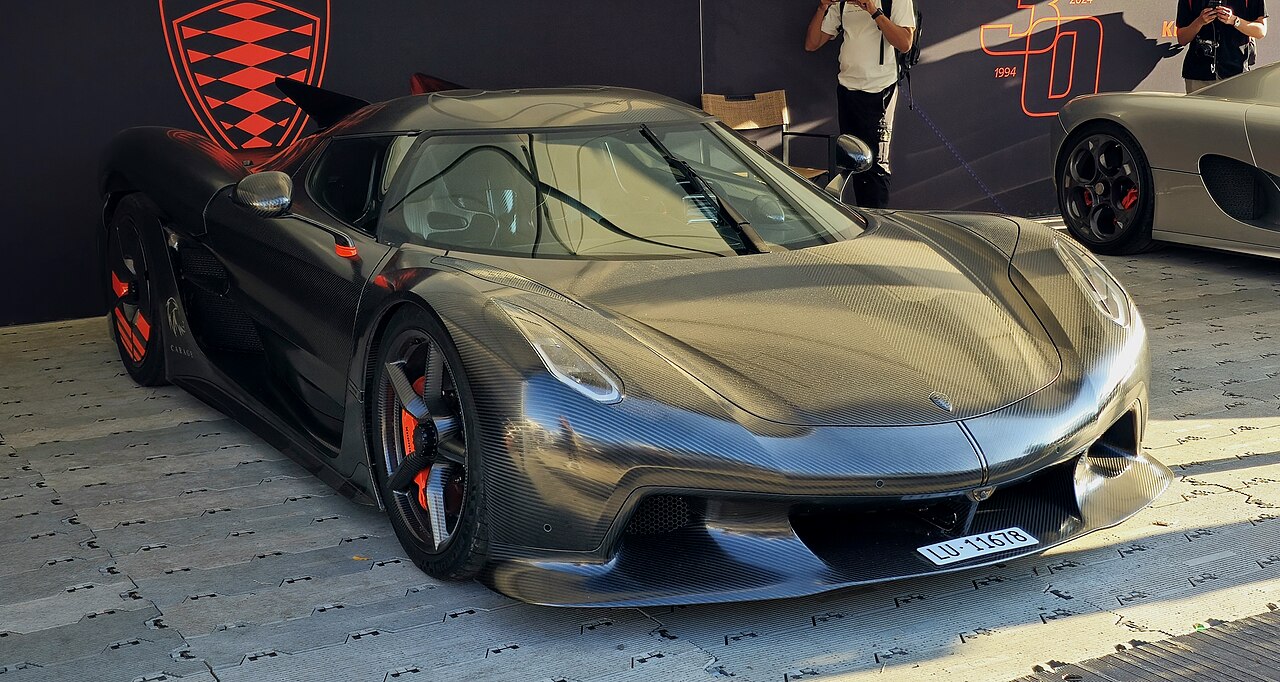
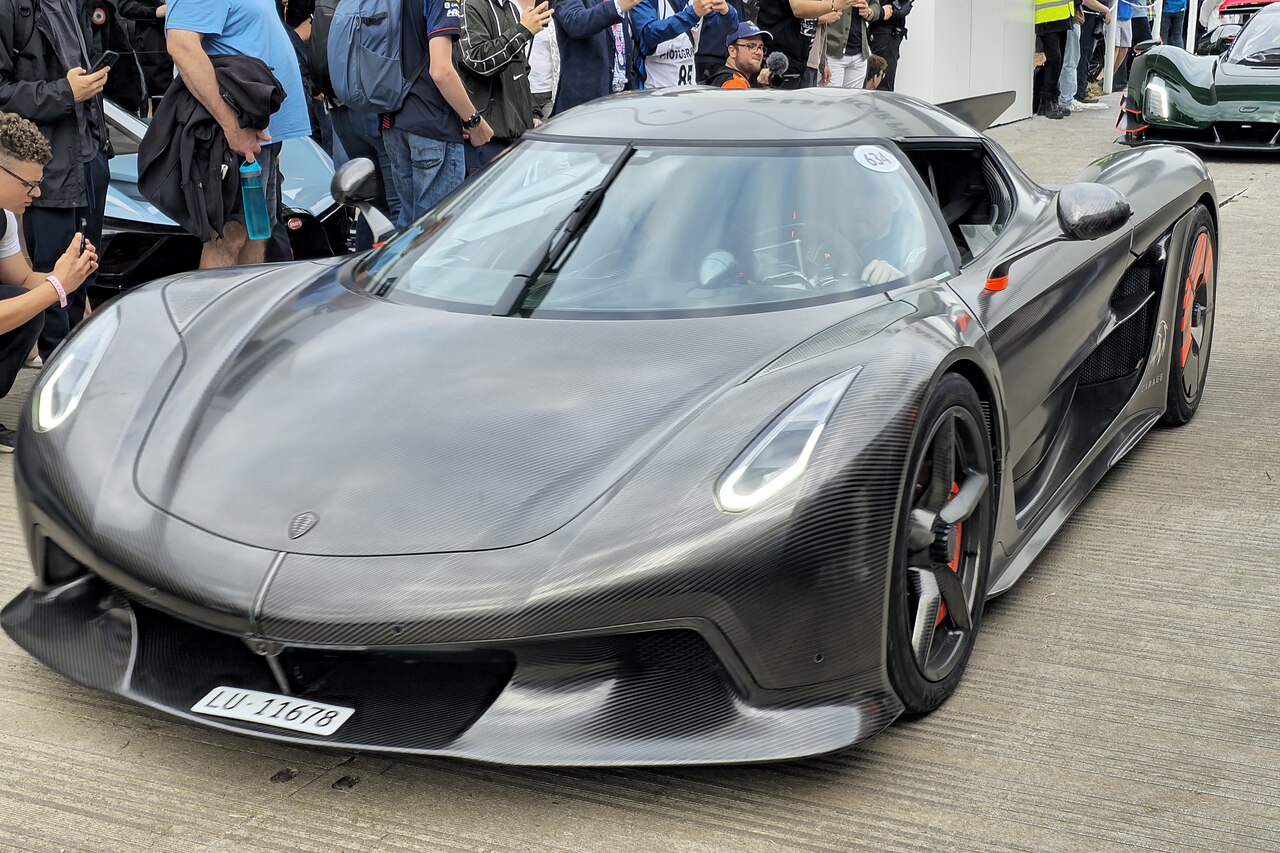
Frequently Asked Questions
What is the Koenigsegg Jesko?
It is a Swedish-built, mid-engine hypercar from Koenigsegg Automotive AB that debuted at the 2019 Geneva Motor Show as the direct successor to the Agera line.
What powers the Koenigsegg Jesko?
The car runs a 5.1-litre twin-turbo V8 capable of up to 1,600 hp on E85 ethanol, mated to a 9-speed multi-clutch gearbox branded as the Light Speed Transmission.
How many Koenigsegg Jesko were made?
Koenigsegg capped total output at 125 units across the standard Jesko range, with a further 30 reserved for the track-only Sadair's Spear variant.
Why is it called 'Jesko'?
The name is a personal tribute to Jesko von Koenigsegg, the late father of founder Christian von Koenigsegg, rather than an acronym or model code.
What variants of the Koenigsegg Jesko exist?
Three versions were offered: the road-legal Attack, the stripped-down track-only Absolut, and the ultra-exclusive Sadair's Spear that sits at the very top of the range.
More in Supercars 1-20
Spotted an error? Know more?
This is a living reference — every entry is fact-audited, and reader corrections feed straight into our audit queue. Suggest an edit · See this site's audit record