
McLaren F1
First road car from McLaren; Le Mans-winning race car derived from it.

naeem mayet · CC BY 2.0
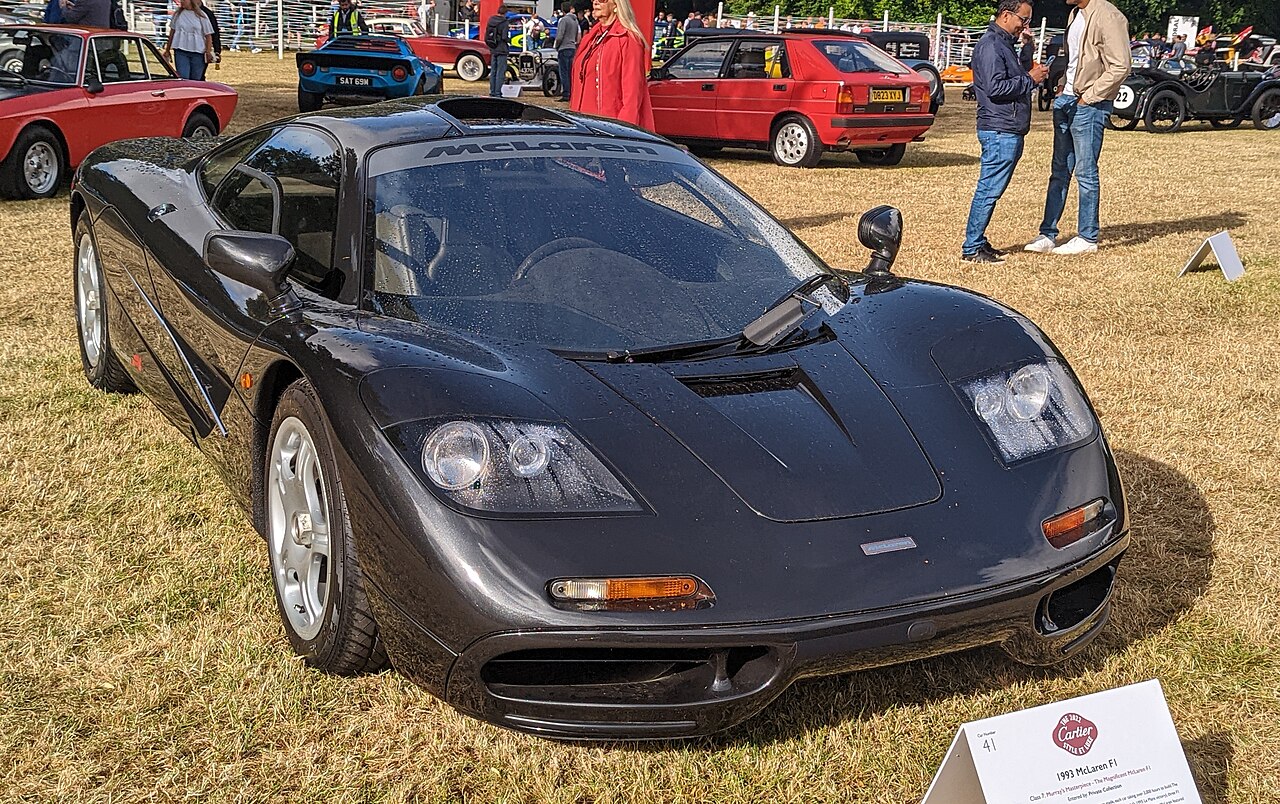
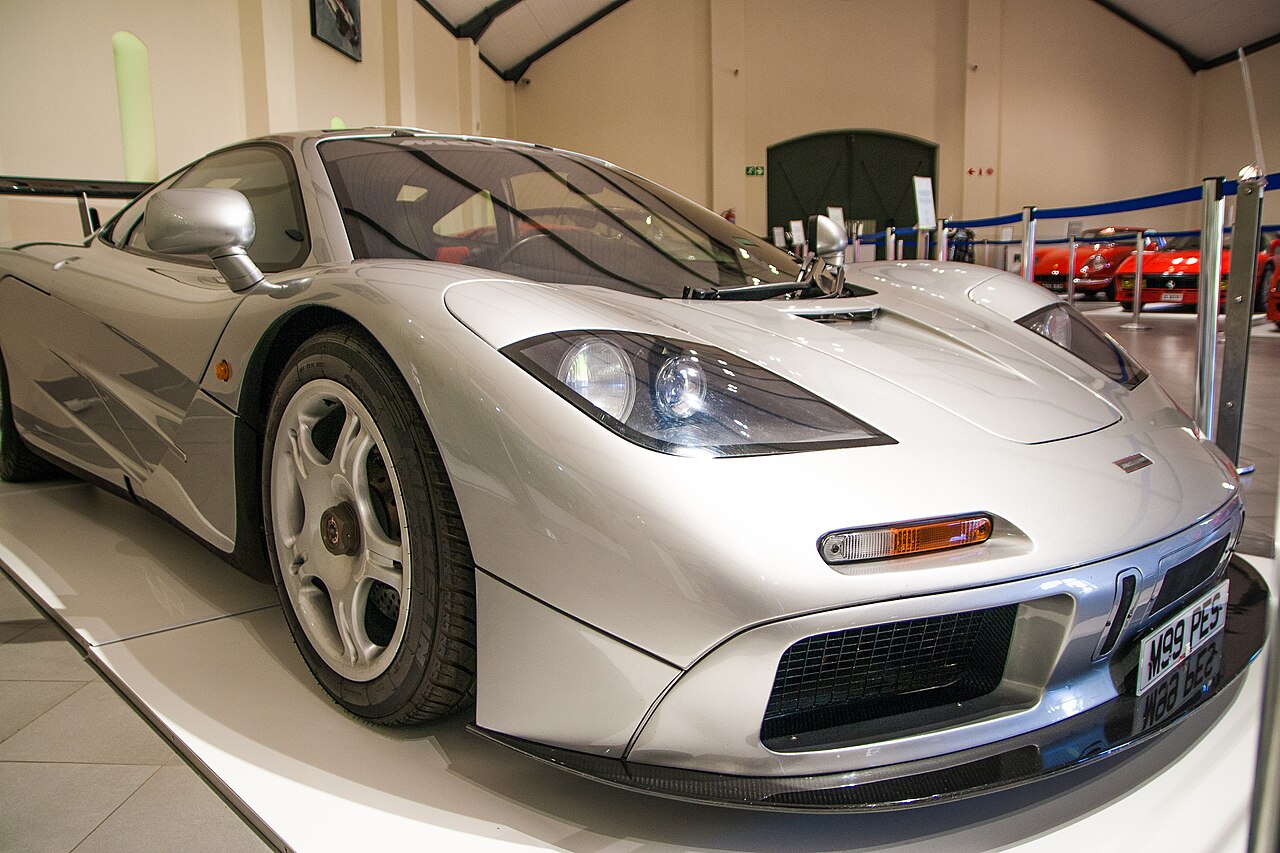
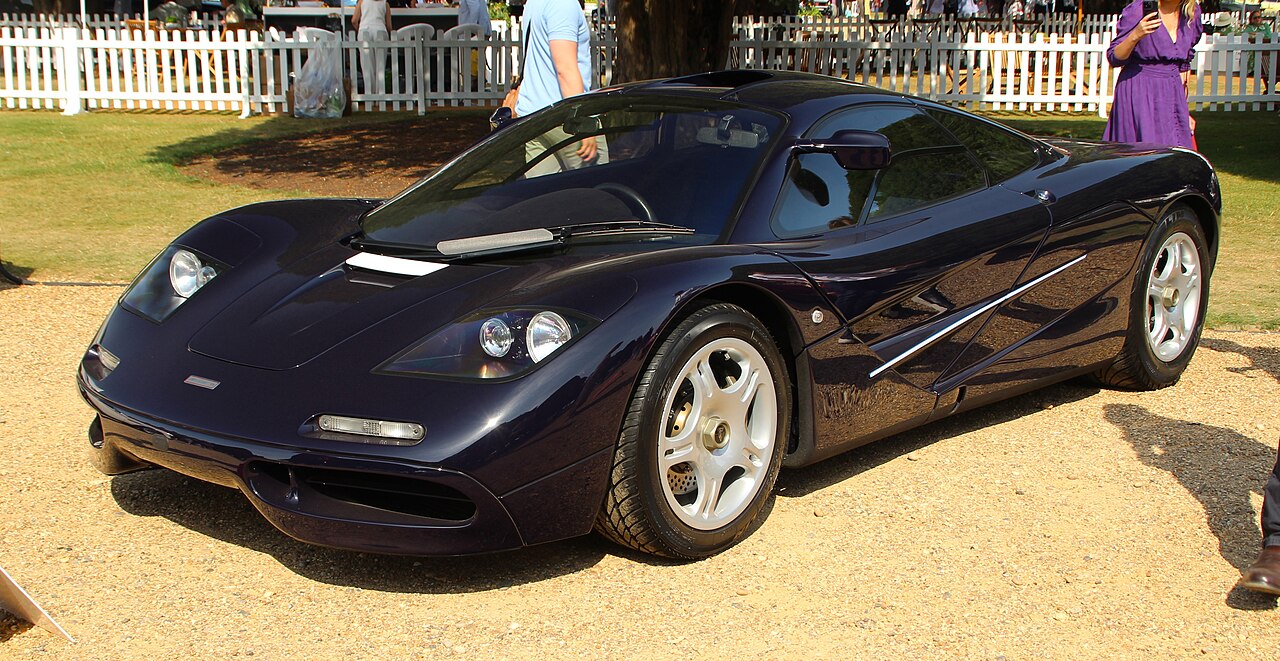
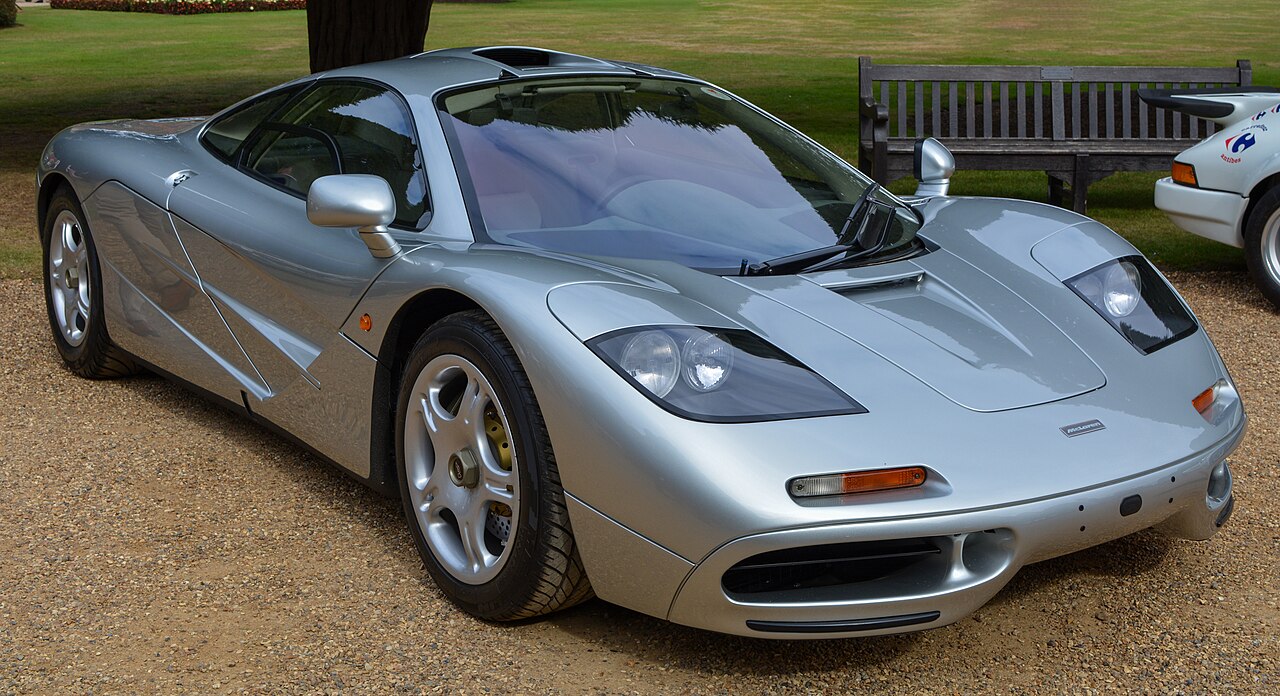
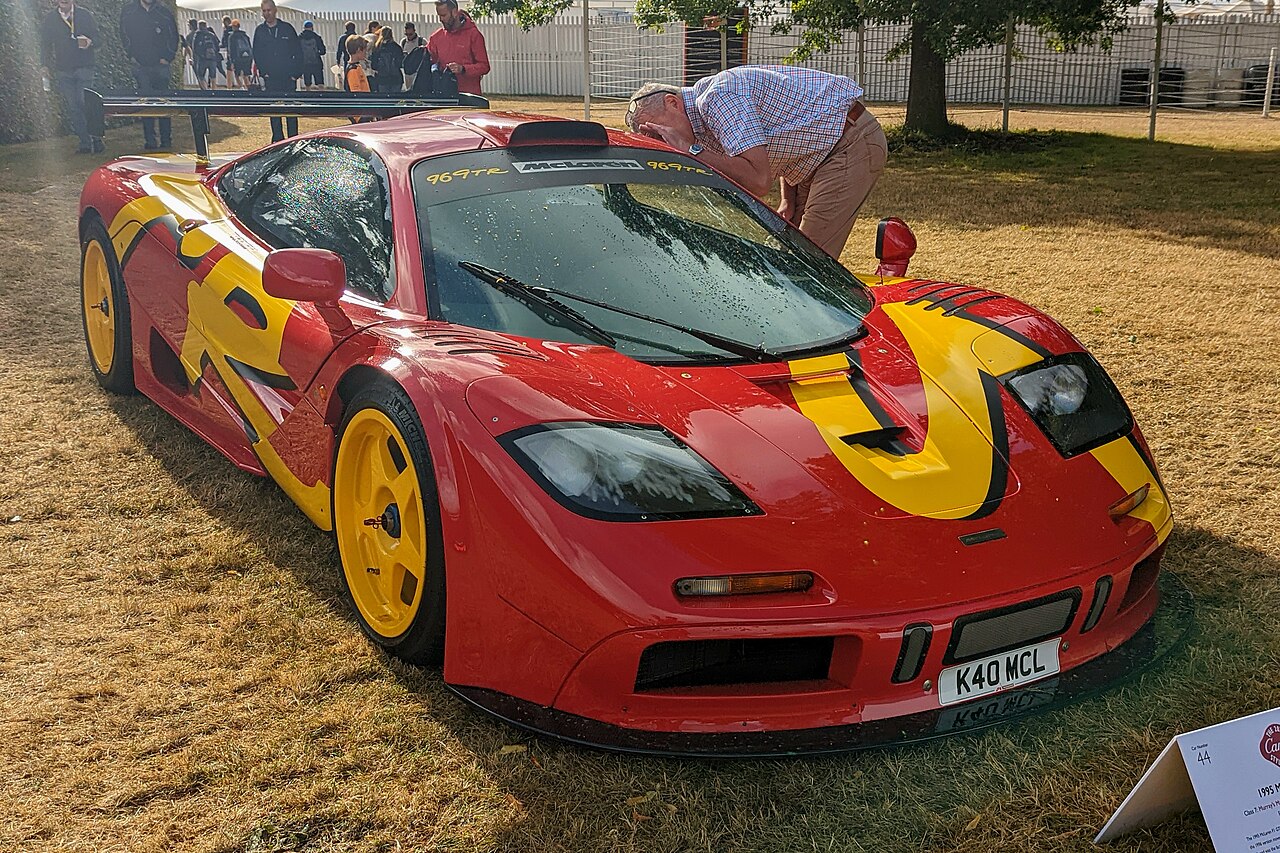
The McLaren F1 is a sports car that was not the first type approved road-going car manufactured by British Formula One team McLaren; the McLaren M6GT preceded it. It was recognized as the world's fastest 'production car' when launched, but contrary to some claims, the road-legal McLaren F1 itself did not win the 24 Hours of Le Mans outright; that victory was achieved by the McLaren F1 GTR, a race car based on the road car. The original concept, by leading technical designer Gordon Murray, convinced then head of McLaren Ron Dennis to support McLaren leaping into manufacturing road-going sportscars.
Lore & Background
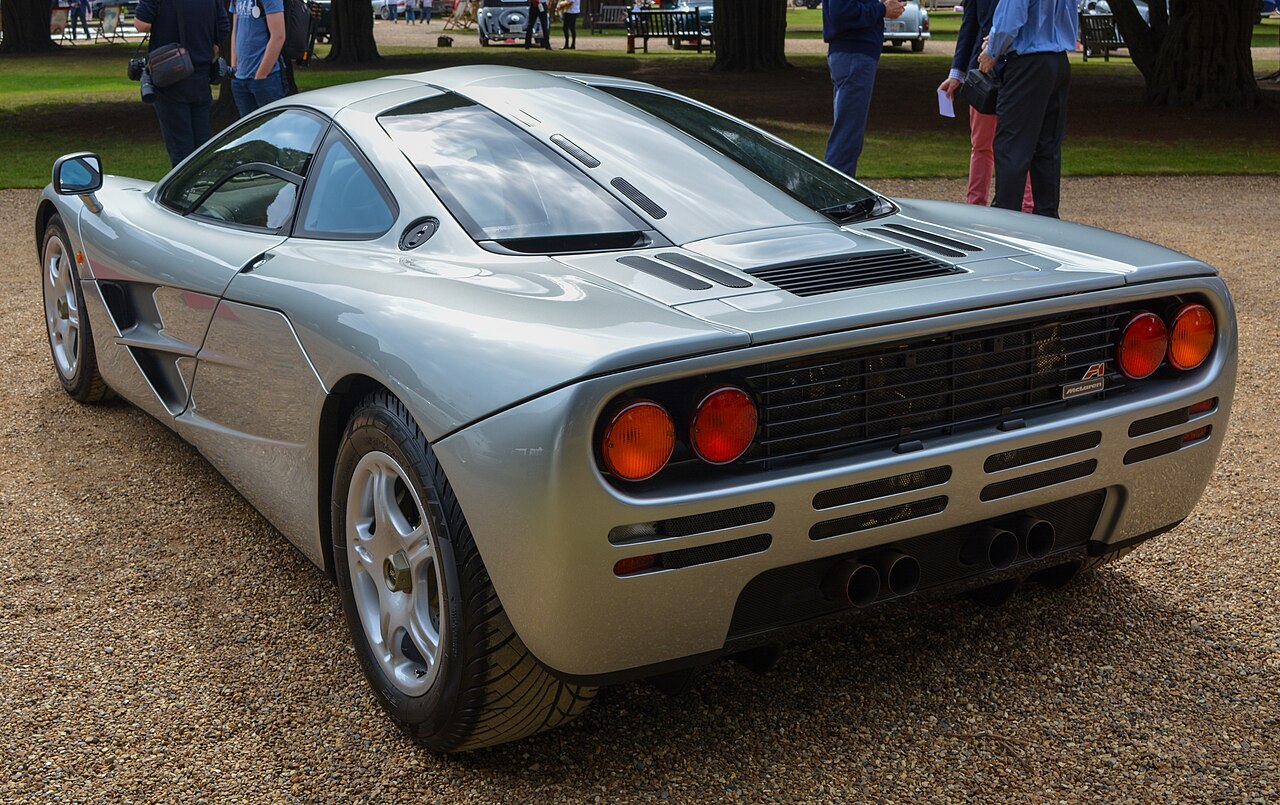
Gordon Murray conceived the F1 as an exercise in creating 'the ultimate road-going sportscar', in the spirit of Bruce McLaren's original plans for the M6 GT. The car had a three-seat layout with the driver front and centre, giving improved visibility. Murray initially approached Honda for a V10 or V12 engine but could not convince them; he then turned to BMW, whose motorsport division designed the 6.1 L BMW S70/2 V12. The car used a carbon-fibre monocoque, gold foil heat shielding, and other high-tech materials to keep weight low.
Reader's Guide
The car's design philosophy—low weight, high power, naturally aspirated engine—influenced later hypercars. Its unconventional three-seat layout and BMW V12 engine made it unique. Notable owners include Lewis Hamilton, Elon Musk, Rowan Atkinson, and Jay Leno.
Did You Know?
- The Jaguar XJR-15 was the first production car to use a carbon-fibre monocoque chassis, not the McLaren F1.
- Approximately 16 grams of gold foil were used in each car for heat insulation in the engine bay.
- Two Ultima GTR kit cars, 'Albert' and 'Edward', were used as test mules and later returned to Ultima and sold, not destroyed by McLaren.
Conception & Design Philosophy
Gordon Murray had been dreaming of a three-seat sports car since his youth. The engineering philosophy was deceptively simple: strip weight while maximising power. Murray achieved this through exotic materials—carbon fibre, titanium, Kevlar, magnesium, even gold—and made the F1 the first production car to feature a fully carbon-fibre monocoque chassis. The unconventional seating arrangement placed the driver front and centre with two passengers flanking him, improving forward visibility. Interestingly, Murray's benchmark was not Ferrari or Porsche; after driving a Honda NSX during a visit to Honda's Tochigi Research Centre alongside Ayrton Senna, the NSX's ride quality and handling became his new target. He even attempted to persuade Honda to build a 4.5-litre V10 or V12 for the project, but they declined, ultimately leading to the BMW partnership.
Engineering & Manufacturing
To bring the F1 to life, McLaren established McLaren Cars (now McLaren Automotive) as a dedicated manufacturing arm. BMW was contracted to develop the S70/2 V12 engine, built specifically and exclusively for this single model. The vehicle incorporated numerous proprietary technologies that set it apart from contemporaries. Being among the first sportscars with a fully carbon-fibre monocoque body and chassis, it achieved a weight and aerodynamic profile that many later competitors struggled to match, all while accommodating three adult occupants. Before the first production cars rolled out, two Ultima MK3 kit cars—chassis numbers 12 and 13, nicknamed Albert and Edward—served as test mules. One validated the gearbox with a 7.4-litre Chevrolet V8, while the other tested the V12, exhaust, and cooling systems. Once testing concluded, McLaren destroyed both to prevent any association with kit cars. The car's structural safety was dramatically demonstrated in April 1993 in Namibia, when a test driver in shorts and a T-shirt struck a rock, rolled the prototype multiple times, and walked away unharmed.
Speed Record & Racing Pedigree
The F1's naturally aspirated V12 delivered its performance without forced induction, a fact that kept it in the conversation decades later. By 2017, Top Gear Magazine still ranked it among the fastest naturally aspirated cars available, placing it in the same performance bracket as the Ferrari Enzo and Aston Martin One-77—vehicles engineered ten and seventeen years after the F1's development.
Cultural Legacy & Critical Acclaim
The F1's reception has been nothing short of reverential. Among enthusiasts, it has earned titles like the greatest automobile ever created and the most excellent sports car of all time. Its ownership roll call reads like a who's who: Lewis Hamilton, Elon Musk, Rowan Atkinson, Jay Leno, George Harrison, Ralph Lauren, Nick Mason, and Sultan Hassanal Bolkiah of Brunei.
Common Misconceptions (Editorial)
Some people believe the McLaren F1 was the first production car with a carbon-fibre monocoque, but that distinction belongs to the Jaguar XJR-15. Another common misconception is that the McLaren F1 itself won the 24 Hours of Le Mans outright; in fact, that victory was achieved by the race-modified McLaren F1 GTR. It is also often incorrectly said that McLaren destroyed the Ultima GTR test mules used during development, but the cars were actually returned to Ultima and sold.
Why It Matters (Editorial)
The McLaren F1 endures as a landmark of automotive engineering because it was conceived not merely as a speed record, but as a purist’s vision of the ultimate road car—emphasizing driver focus, lightweight materials, and bespoke design. Its legacy is reinforced by the rare combination of a central driving position, a BMW-built V12, and pioneering use of gold foil and carbon fiber, which together set a standard that influences supercar development decades later.
Gallery
Frequently Asked Questions
What exactly is the McLaren F1?
The McLaren F1 is a high-performance road car designed by Gordon Murray and built by the British Formula One team McLaren. It was the first road-going car the company ever produced, following the earlier M6GT prototype.
Did the McLaren F1 win the 24 Hours of Le Mans?
Not the road-legal F1 itself; the outright Le Mans victory was claimed by the McLaren F1 GTR, a dedicated racing variant derived from the road car.
Why is the McLaren F1 considered so important in supercar history?
It proved a Formula One team could leap into building a road-going supercar and immediately set a new top-speed benchmark. Its centre-seat cockpit, carbon-fibre monocoque, and triple-turbo V12 became iconic design references for decades.
Who was behind the McLaren F1's design?
Gordon Murray, McLaren's lead technical designer, created the original concept and persuaded then-team principal Ron Dennis to green-light the project.
More in Supercars 1-20
Spotted an error? Know more?
This is a living reference — every entry is fact-audited, and reader corrections feed straight into our audit queue. Suggest an edit · See this site's audit record