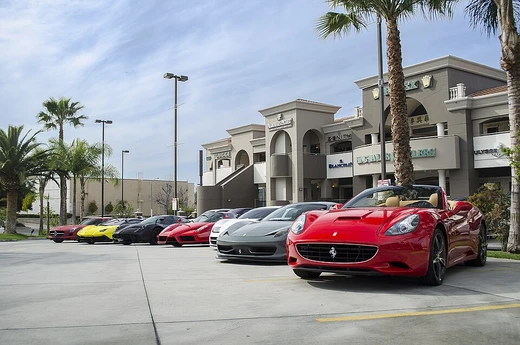
Bugatti Veyron
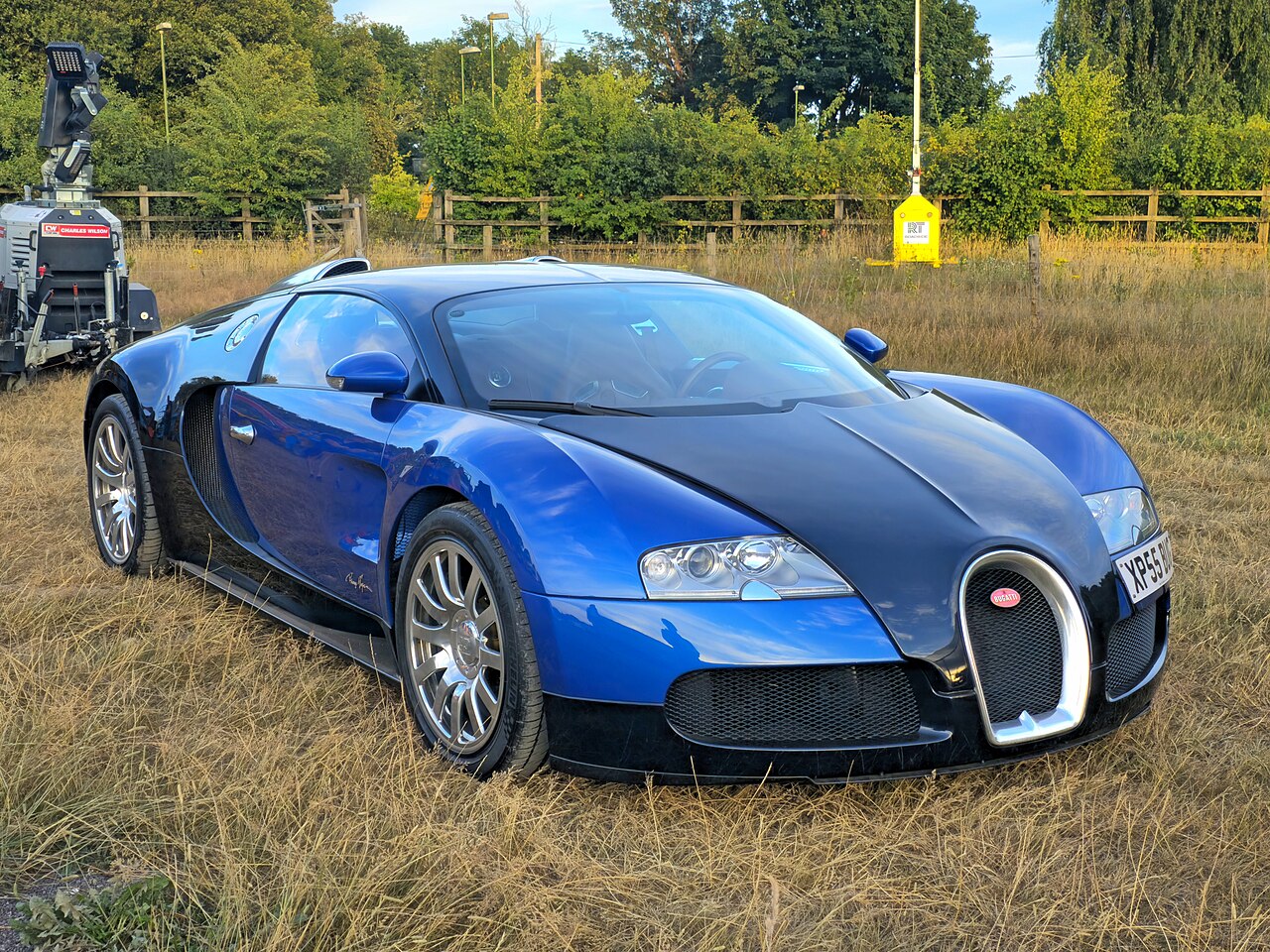
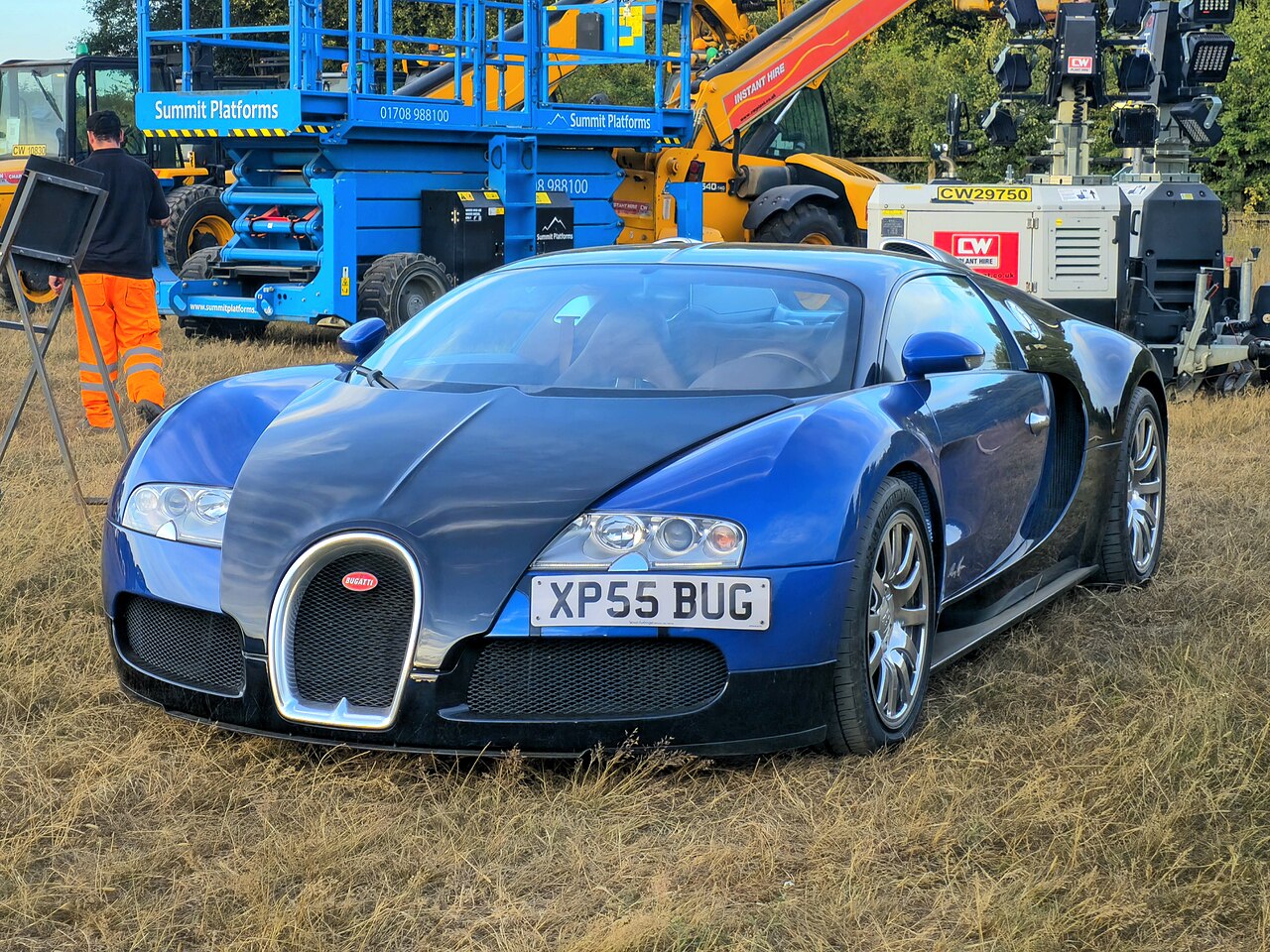
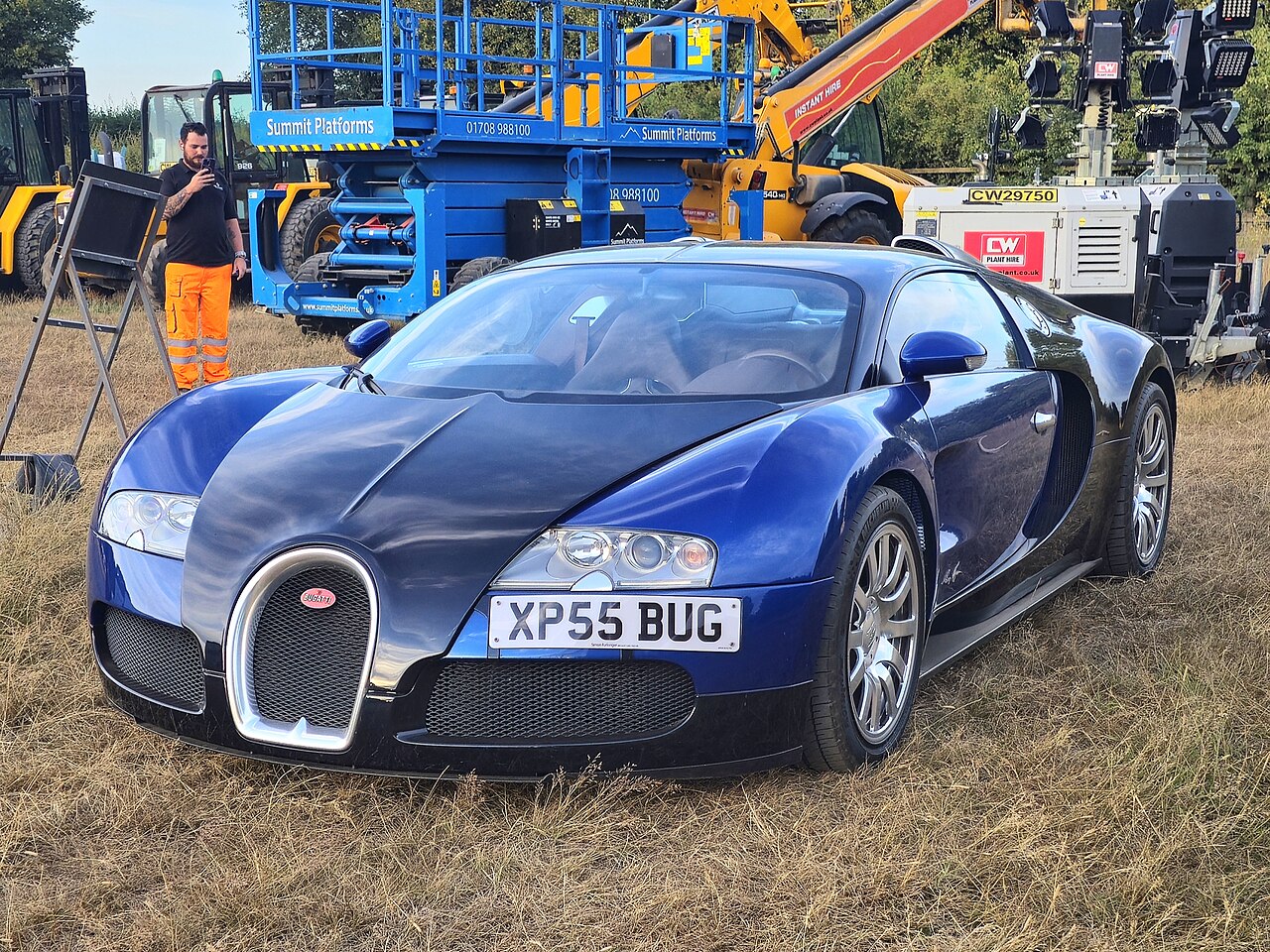
A mid-engine sports car named after racing driver Pierre Veyron.

via Wikipedia: Bugatti Veyron · see source
The Bugatti Veyron EB 16.4 is a mid-engine sports car designed and developed in Germany by the Volkswagen Group and Bugatti, and manufactured in Molsheim, France by French automobile manufacturer Bugatti. It was named after the racing driver Pierre Veyron. The original version has a top speed of 407 km/h (253 mph). It was named the 2000s Car of the Decade by the BBC television programme Top Gear. The standard Veyron also won Top Gear's Best Car Driven All Year award in 2005.
- Manufacturer
- Bugatti (Volkswagen Group)
- Production
- 2005–2015
- Engine
- 8.0 L quad-turbocharged W16
- Power output
- 736 kW (987 hp; 1,001 PS)
- Top speed
- 407 km/h (253 mph) original version
- Chief designer
- Hartmut Warkuß
- Exterior designer
- Jozef Kabaň
Verified Timeline
Lore & Background
In May 1998, Volkswagen AG acquired the rights to use the Bugatti logo and the trade name Bugatti Automobiles S.A.S. Between October 1998 and September 1999, Bugatti introduced a series of Giugiaro-designed concept vehicles, each with permanent four-wheel drive and powered by the Volkswagen-designed W18 engine. The first car, the EB 118, was a 2-door luxury coupé presented at the 1998 Paris Motor Show. The next car, the EB 218, was a 4-door saloon presented at the 1999 Geneva Motor Show. The third and final car, the 18/3 Chiron, was a mid-engine sports car presented at the 1999 International Motor Show in Frankfurt. In October 1999, Bugatti unveiled a fourth concept car at the Tokyo Motor Show. The EB 18/4 Veyron was a mid-engine sports car styled in-house under the direction of Hartmut Warkuß. In 2000, a modified version, the EB 16/4 Veyron, was displayed at motor shows in Detroit, Geneva, and Paris. Rather than the three-bank W18 engine of the four previous concept cars, the EB 16/4 featured the four-bank W16 engine architecture installed in every production example of the Veyron. The decision to start production of the car was made by the Volkswagen Group in 2001. The first roadworthy prototype was completed in August 2003. In the transition from development to series production, considerable technical problems had to be addressed, repeatedly delaying production until September 2005.
Reader's Guide
The Bugatti Veyron features an 8.0-litre, quad-turbocharged, W16 cylinder engine, equivalent to two narrow-angle V8 engines bolted together. The transmission is a dual-clutch direct-shift computer-controlled automatic transmission having seven gear ratios, with a shift time of less than 150 milliseconds, built by Ricardo of England. It has permanent all-wheel drive using the Haldex Traction system. It uses special Michelin PAX run-flat tyres, designed specifically to accommodate the Veyron's top speed, and cost US$25,000 per set. The tyres can be mounted on the wheels only in France, a service which costs US$70,000. Kerb weight is 1,888 kg (4,162 lb). The Bugatti Veyron has a total of ten radiators. German inspection officials recorded an average top speed of the original version at 408.47 km/h (253.81 mph) during test sessions on Volkswagen Group's private Ehra-Lessien test track on 19 April 2005. The Super Sport version of the Veyron is one of the fastest street-legal production cars in the world, with a top speed of 431.072 km/h (267.856 mph). The Veyron Grand Sport Vitesse was the fastest roadster in the world, reaching an averaged top speed of 408.84 km/h (254.04 mph) in a test on 6 April 2013. The production car speed record was later taken by another Bugatti, the Chiron. The Bugatti Veyron was discontinued in late 2014, but special edition models continued to be produced until 2015.
Did You Know?
- The Veyron's name honors Pierre Veyron, a Bugatti development engineer and race driver who won the 1939 24 Hours of Le Mans with co-driver Jean-Pierre Wimille.
- At top speed, the Veyron's engine consumes 45,000 L of air per minute, as much as a human breathes in four days.
- The Veyron has ten radiators: three for intercooler loops, three for engine water, one for air conditioning, one for transmission oil, one for differential oil, and one for engine oil.
- A replacement transmission for the Veyron costs just over US$120,000.
- The Veyron's tyres are Michelin PAX run-flats costing US$25,000 per set, and can only be mounted on the wheels in France, a service costing US$70,000.
From Acquisition to Asphalt – The Long Road to Production
In May 1998, Volkswagen AG acquired the rights to use the Bugatti logo and the trade name Bugatti Automobiles S.A.S. Between October 1998 and September 1999, Bugatti introduced a series of Giugiaro-designed concept vehicles, each with permanent four-wheel drive and powered by the Volkswagen-designed W18 engine. The first car, the EB 118, was a 2-door luxury coupé presented at the 1998 Paris Motor Show. The next car, the EB 218, was a 4-door saloon presented at the 1999 Geneva Motor Show. The third and final car, the 18/3 Chiron, was a mid-engine sports car presented at the 1999 International Motor Show in Frankfurt. In October 1999, Bugatti unveiled a fourth concept car at the Tokyo Motor Show. The EB 18/4 Veyron was a mid-engine sports car styled in-house under the direction of Hartmut Warkuß. In 2000, a modified version, the EB 16/4 Veyron, was displayed at motor shows in Detroit, Geneva, and Paris. Rather than the three-bank W18 engine of the four previous concept cars, the EB 16/4 featured the four-bank W16 engine architecture installed in every production example of the Veyron. The decision to start production of the car was made by the Volkswagen Group in 2001. The first roadworthy prototype was completed in August 2003. In the transition from development to series production, considerable technical problems had to be addressed, repeatedly delaying production until September 2005.
The W16 Heart and the Machine Around It
The Veyron features an 8.0-litre, quad-turbocharged, W16 cylinder engine, equivalent to two narrow-angle V8 engines bolted together. Each cylinder has four valves for a total of 64, but the configuration of each bank allows two overhead camshafts to drive two banks of cylinders so only four camshafts are needed. The engine is fed by four turbochargers and displaces 7,993 cc (487.8 cu in), with a square 86 by 86 mm (3.39 by 3.39 in) bore and stroke. According to Volkswagen Group and certified by TÜV Süddeutschland, the W16 engine utilised by the Veyron has a power output of 736 kW (987 hp; 1,001 PS), and generates 1,250 N⋅m (922 lbf⋅ft) of torque. The transmission is a dual-clutch direct-shift computer-controlled automatic transmission having seven gear ratios, with magnesium paddles behind the steering wheel and a shift time of less than 150 milliseconds, built by Ricardo of England. It also has permanent all-wheel drive using the Haldex Traction system. It uses special Michelin PAX run-flat tyres, designed specifically to accommodate the Veyron's top speed, and cost US$25,000 per set. The tyres can be mounted on the wheels only in France, a service which costs US$70,000. Kerb weight is 1,888 kg (4,162 lb). The Bugatti Veyron has a total of ten radiators: 3 air-to-liquid intercooler loop radiators, 3 engine water-cooling radiators, 1 air conditioning condenser, 1 transmission oil radiator, 1 differential oil radiator, and 1 engine oil radiator. It has a drag coefficient of Cd=0.41 (normal condition) and Cd=0.36 (after lowering to the ground), and a frontal area of 2.07 m2 (22.3 sq ft).
The People and the Name
The Veyron's chief designer was Hartmut Warkuß, with the exterior being designed by Jozef Kabaň of Volkswagen. Much of the engineering work was conducted under the guidance of chief technical officer Wolfgang Schreiber. The Veyron includes a sound system designed and built by Burmester Audiosysteme. The Veyron EB 16.4 is named in honor of Pierre Veyron, a Bugatti development engineer, test driver and company race driver who, with co-driver Jean-Pierre Wimille, won the 1939 24 Hours of Le Mans while driving a Bugatti. The 'EB' refers to Bugatti founder Ettore Bugatti and the '16.4' refers to the engine's 16 cylinders and quad-turbochargers.
Speed Records, Awards, and the Final Chapter
The original version has a top speed of 407 km/h (253 mph). It was named the 2000s Car of the Decade by the BBC television programme Top Gear. The standard Veyron also won Top Gear's Best Car Driven All Year award in 2005. German inspection officials recorded an average top speed of the original version at 408.47 km/h (253.81 mph) during test sessions on Volkswagen Group's private Ehra-Lessien test track on 19 April 2005. The Super Sport version of the Veyron is one of the fastest street-legal production cars in the world, with a top speed of 431.072 km/h (267.856 mph). The Veyron Grand Sport Vitesse was the fastest roadster in the world, reaching an averaged top speed of 408.84 km/h (254.04 mph) in a test on 6 April 2013. The production car speed record was later taken by another Bugatti, the Chiron, and then often changed hands for a while. In December 2010, Bugatti began offering prospective buyers the ability to customise exterior and interior colours by using the Veyron 16.4 Configurator application on the marque's official website. The Bugatti Veyron was discontinued in late 2014, but special edition models continued to be produced until 2015.
Common Misconceptions (Editorial)
Some people assume the Bugatti Veyron was designed and built entirely in Italy or France, but it was designed and developed by the Volkswagen Group in Germany, and manufactured in Molsheim, France. Another common misconception is that the Veyron always used a W16 engine; in fact, the concept cars from 1998–1999 used W18 engines, and the W16 appeared only in the EB 16/4 concept from 2000 onward.
Why It Matters (Editorial)
The Bugatti Veyron endures as a landmark in automotive engineering because it proved that a road-legal car could exceed 400 km/h while still offering luxury and usability. Its quad-turbocharged W16, ten radiators, and staggering development costs cemented its status as a symbol of excess and innovation, making it the definitive hypercar of its era.
Gallery
Frequently Asked Questions
Who is Bugatti Veyron?
The Bugatti Veyron EB 16.4 is a mid-engine supercar built in Molsheim, France, by Bugatti under the Volkswagen Group umbrella from 2005 to 2015. It was designed under chief designer Hartmut Warkuß and carries the name of French racing driver Pierre Veyron.
What engine does the Bugatti Veyron use?
It is powered by an 8.0-litre W16 engine with four turbochargers, producing around 987 horsepower (1,001 PS). That quad-turbo W16 layout was essentially unheard of in a production car when the Veyron debuted.
How fast can a Bugatti Veyron go?
The original Veyron is rated at 407 km/h (253 mph), a speed that the driver must unlock with a special key to engage the car's top-speed mode. This made it the first production supercar to cross the 400 km/h threshold.
Who is the Bugatti Veyron named after?
The car honours Pierre Veyron, a French Grand Prix driver from the early 1900s. Bugatti chose his name to tie the modern hypercar back to the brand's long motorsport heritage.
Why is the Bugatti Veyron considered a landmark supercar?
It redefined what a road-legal car could do by pairing a quad-turbo W16 with a verified 407 km/h top speed, achievements no other production car had reached at the time. Its engineering impact was later recognised when Top Gear named it the BBC Car of the Decade for the 2000s.
More in Supercars 1-20
Spotted an error? Know more?
This is a living reference — every entry is fact-audited, and reader corrections feed straight into our audit queue. Suggest an edit · See this site's audit record