Ferrari F40
Last Ferrari personally approved by Enzo Ferrari.

Calreyn88 · CC BY-SA 4.0
The Ferrari F40 (Type F120) is a mid-engine, rear-wheel drive sports car engineered by Nicola Materazzi with styling by Pininfarina. At the time it was Ferrari's fastest, most powerful, and most expensive car for sale.
- Drag coefficient
- Cd=0.34
Lore & Background
Permission was granted on condition work took place outside the Monday-to-Friday work week. A validation driver convinced him that Materazzi could make the base car roadworthy, leading to the F40. The body was designed by Pietro Camardella under Aldo Brovarone of Pininfarina; Materazzi worked on engine, gearbox, and mechanical parts.
Reader's Guide
The F40 was Ferrari's response to calls for a raw, Spartan sports car, described by a marketing figure as 'very fast, sporting in the extreme and Spartan.' It lacked sound system, door handles, glove box, leather trim, carpets, and door panels. The F40 set a record sale of £1 million in 1990, a record that stood into the 2010s.
Did You Know?
- The first fifty cars had sliding Lexan windows; later cars had wind-down windows.
- Pirelli developed the P-Zero tyre specifically for the F40, using Kevlar and asymmetrical tread patterns from Formula 1 experience.
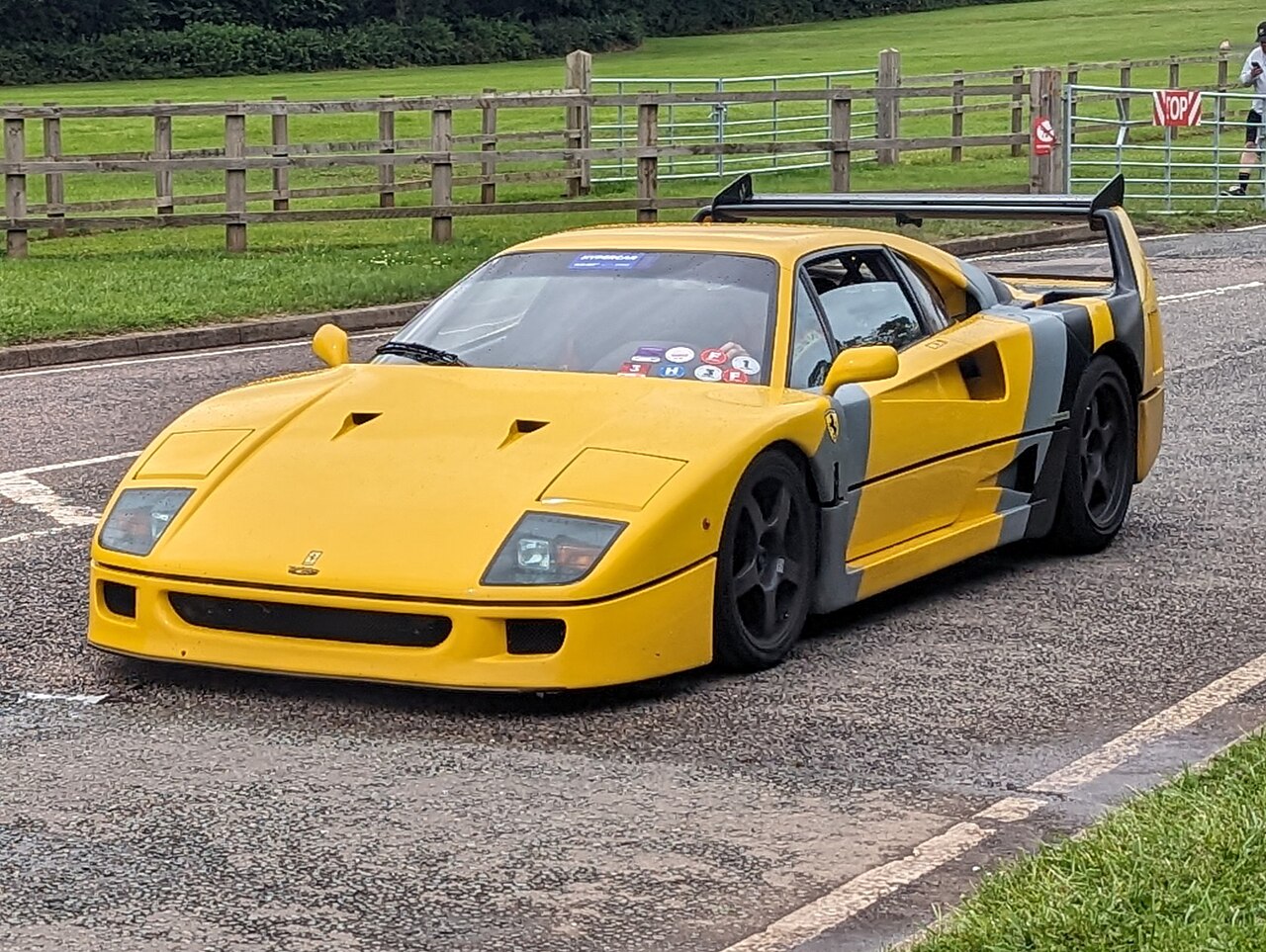
- At least seven cars were modified for the Sultan of Brunei in right-hand drive with changes to colour, power, and interior comforts.
Birth from the Ashes of a Cancelled Race
The F40 was born not in a marketing boardroom but from the wreckage of a defunct racing programme. Because Enzo had ceded production authority, Materazzi had to secure approval from General Manager Eugenio Alzati, who granted it on the strict condition that all development happen outside the normal Monday-to-Friday schedule. A validation driver then persuaded Enzo that Materazzi could salvage the underlying concept and render it roadworthy. Moved by the wish to stamp his personal legacy onto one final sports car, Enzo green-lit the project.
Spartan by Design, Spartan by Conviction
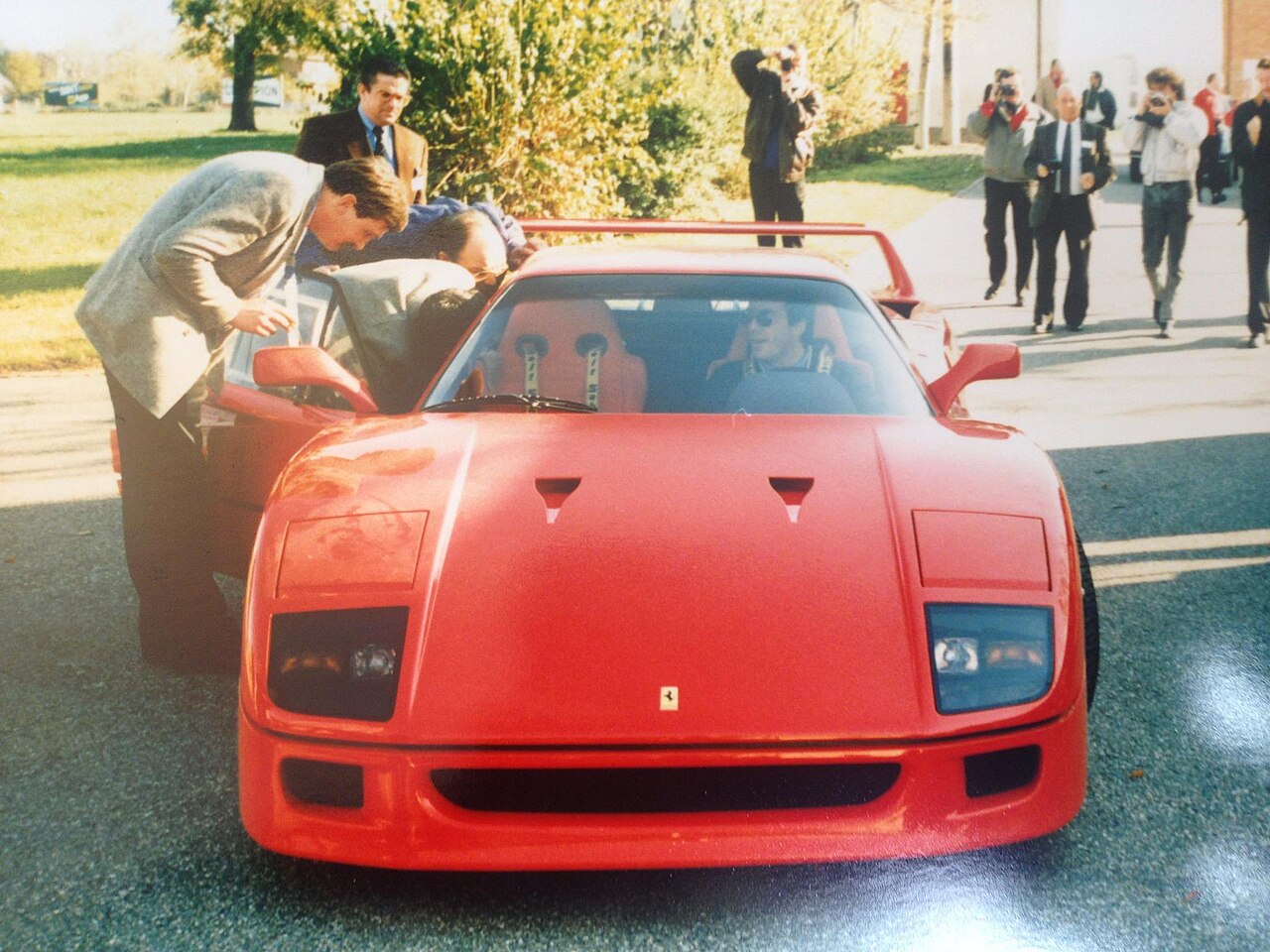
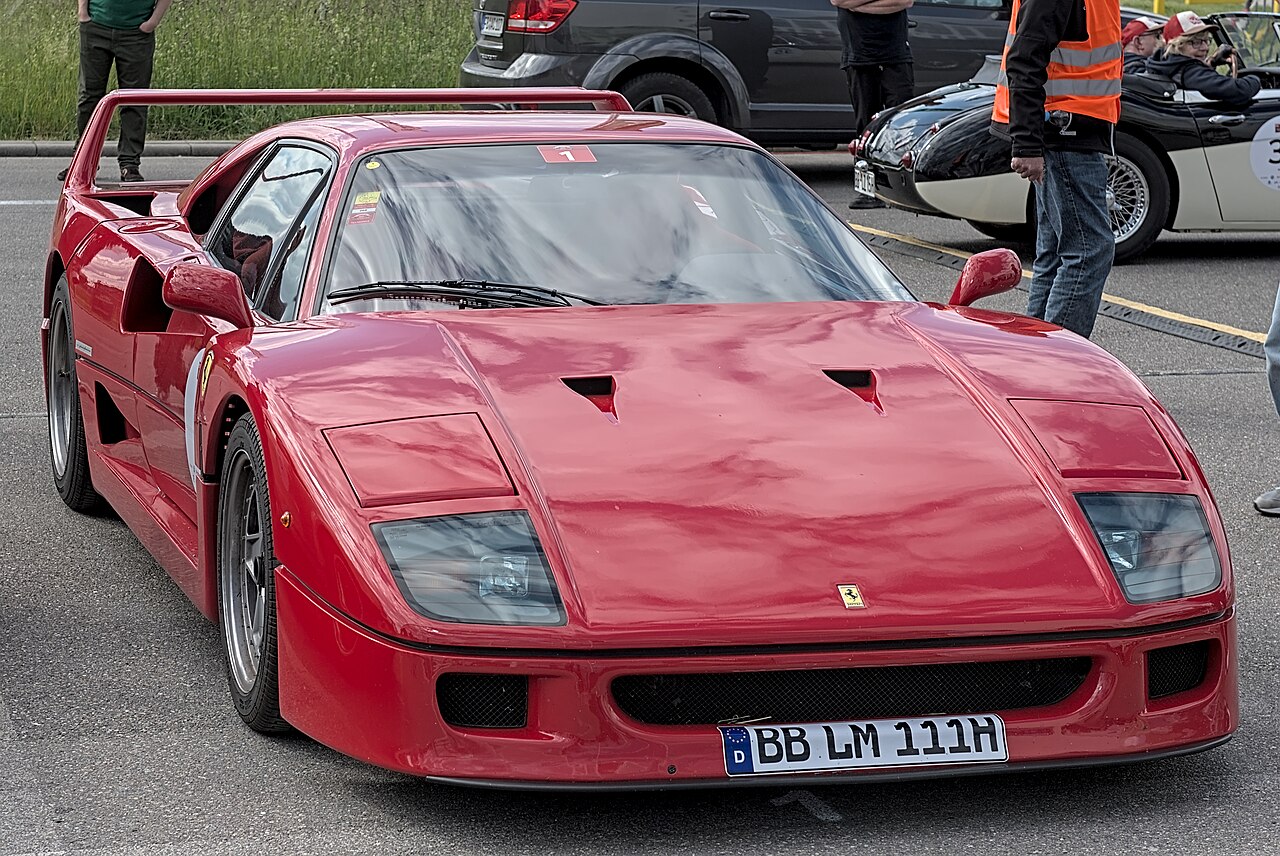
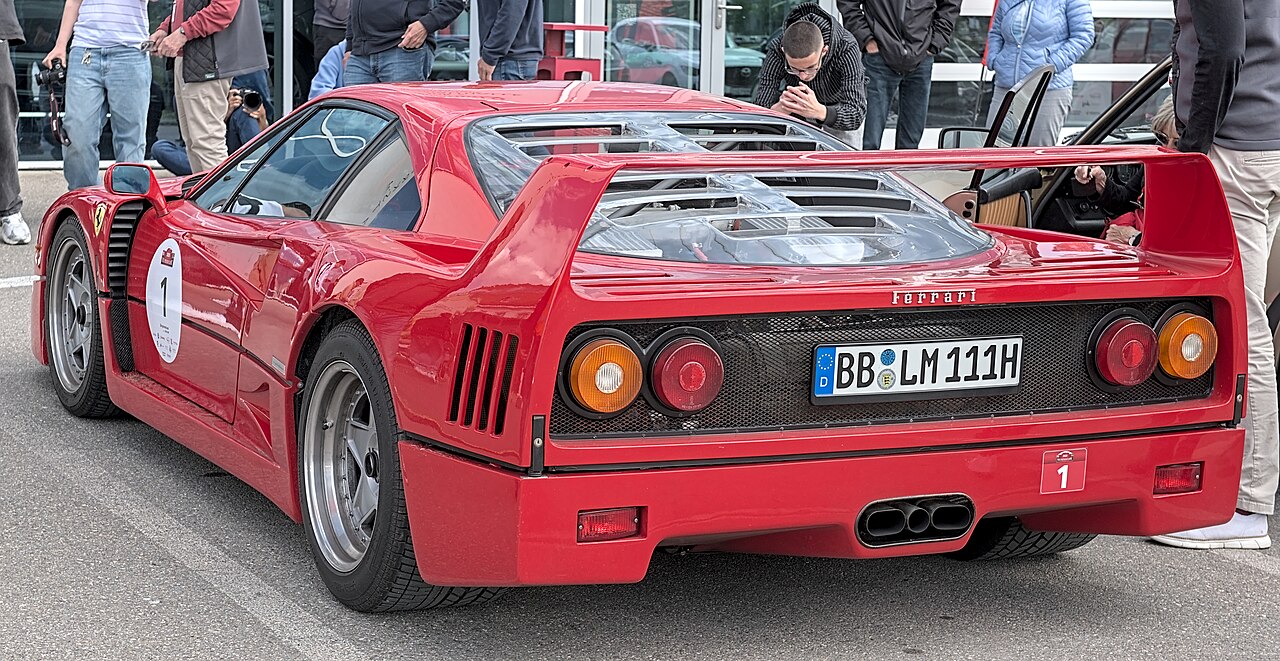
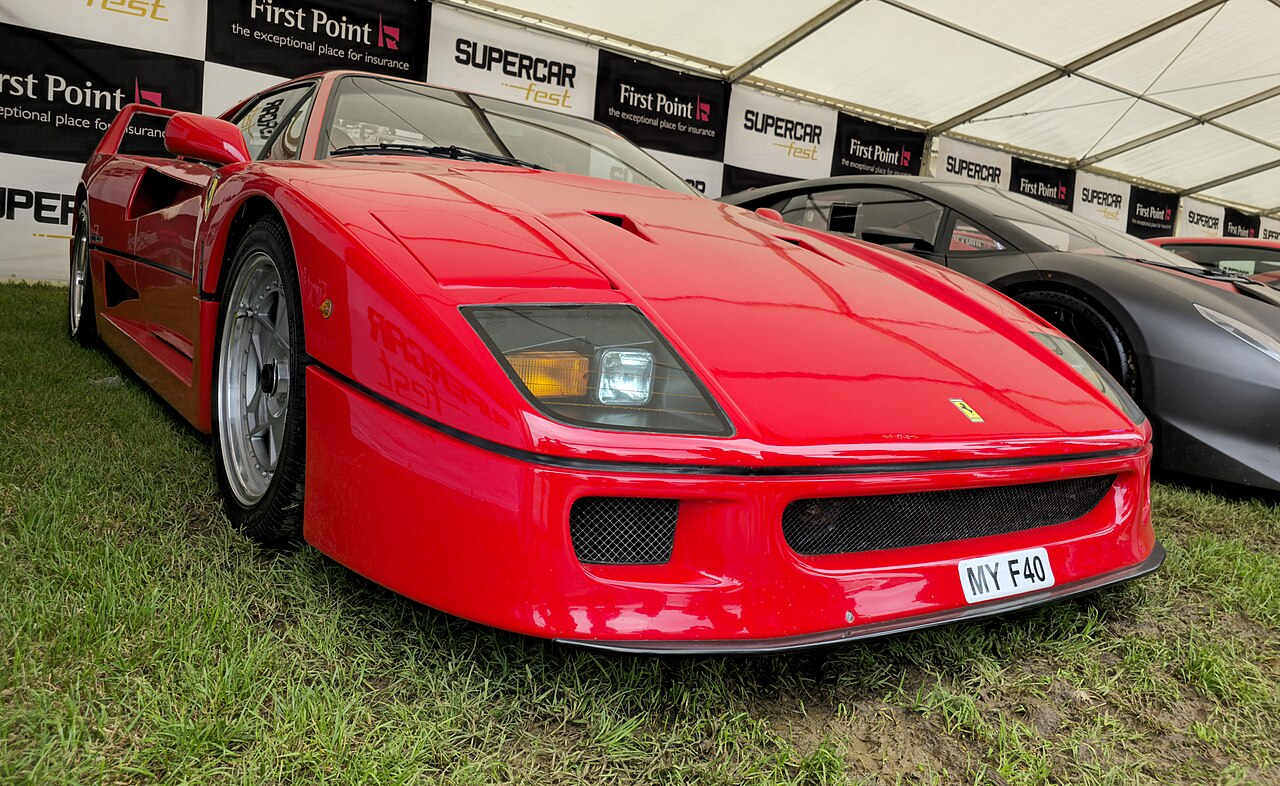
Ferrari's marketing team framed the F40's deliberate austerity in blunt terms: the car was meant to be 'very fast, sporting in the extreme and Spartan,' a direct answer to customer complaints that recent Ferraris had grown too plush. Inside, the cabin stripped away every non-essential: no audio system, no door handles, no glove compartment, no leather, no carpets, no door panels. A modest air-conditioning unit was the sole comfort concession. Pininfarina's Pietro Camardella, supervised by Aldo Brovarone, shaped the bodywork from Kevlar, carbon fibre, and aluminium panels, while polycarbonate plastic replaced glass for the windshield and side windows to shave weight. The first fifty examples received sliding Lexan windows before the switch to wind-down units. Portions of the exterior work were outsourced to firms such as Michelotto.
The 2.9-Litre Twin-Turbo V8 and Its Thermal Challenge
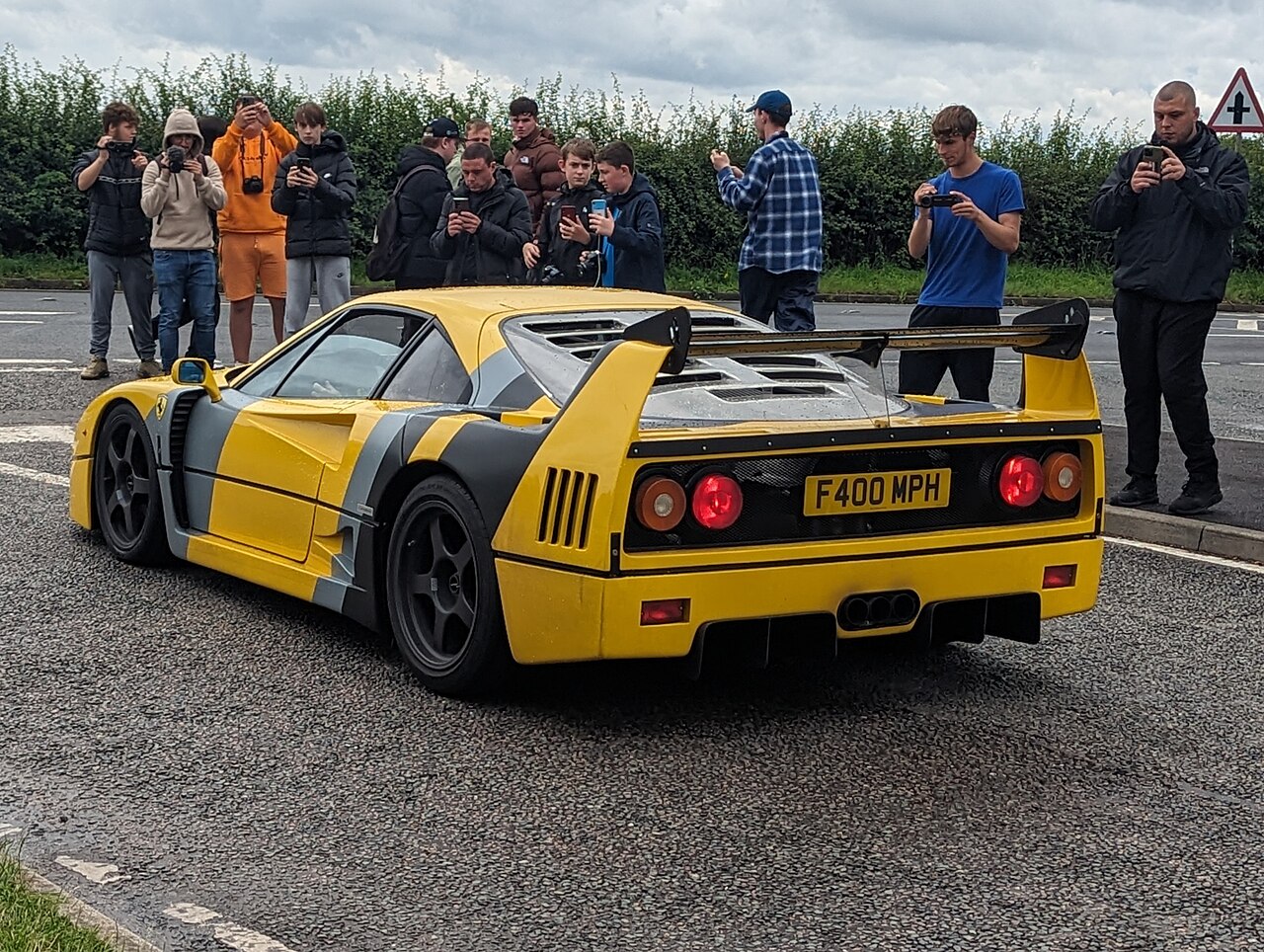
The engine ran without a catalytic converter until 1990, when United States emissions rules forced its addition. Exhaust routing was distinctive: two flanking pipes carried gases from each cylinder bank while a central pipe vented the turbo wastegate. The double-wishbone suspension inherited its basic architecture from the GTO but received upgraded components and revised settings. Because ground clearance was unusually low, later cars gained hydraulic lift chambers built into the front dampers. Thermal management was a major design driver; the car was conceived almost like a covered open-wheel racer, with a partial undertray smoothing airflow beneath the radiator and cabin, a second undertray with diffusers behind the engine, and an intentionally unsealed engine bay to shed heat.
Rarity, Record Prices, and the Sultan's Custom Cars
The F40 arrived as Ferrari's 40th-anniversary celebration and, crucially, as the final road car to bear Enzo Ferrari's personal approval. Every example rolled out of the Maranello factory in Rosso Corsa livery and left-hand-drive configuration, a uniformity broken only by at least seven cars reworked for the Sultan of Brunei in right-hand drive; the Sultan engaged Pininfarina's prototype manager Paolo Garella to alter colour, tune the power, and add interior comforts. The car's market impact was immediate: Formula One champion Nigel Mansell's example fetched a then-record £1 million at auction in 1990, a benchmark that held into the 2010s.
Common Misconceptions (Editorial)
A common misconception is that the Ferrari F40 was designed and developed entirely in-house by Ferrari. In fact, the body was designed by Pietro Camardella under Aldo Brovarone of Pininfarina, and the car’s engineering was led by Nicola Materazzi, who worked on the engine, gearbox, and mechanical parts.
Why It Matters (Editorial)
The Ferrari F40 endures as a landmark not just for its blistering performance, but for the unusual origin story that saw its development happen on weekends, outside the official work week. It represents a moment when raw engineering ambition and a maverick team working against corporate schedules produced a car that defined an era of supercar design and tire technology.
Gallery
Frequently Asked Questions
Why is the Ferrari F40 so significant to Ferrari fans?
Beyond its record-breaking performance, the F40 carries the unique distinction of being the final model Enzo Ferrari personally signed off on. That personal stamp, combined with its anniversary purpose, gives it a symbolic weight no other Ferrari quite matches.
Who was behind the design and engineering of the Ferrari F40?
Nicola Materazzi led the engineering effort, while Pininfarina shaped the car's distinctive exterior. Their collaboration produced a body with a drag coefficient of just 0.34, a remarkable figure for a road car of that era.
More in Supercars 1-20
Spotted an error? Know more?
This is a living reference — every entry is fact-audited, and reader corrections feed straight into our audit queue. Suggest an edit · See this site's audit record